



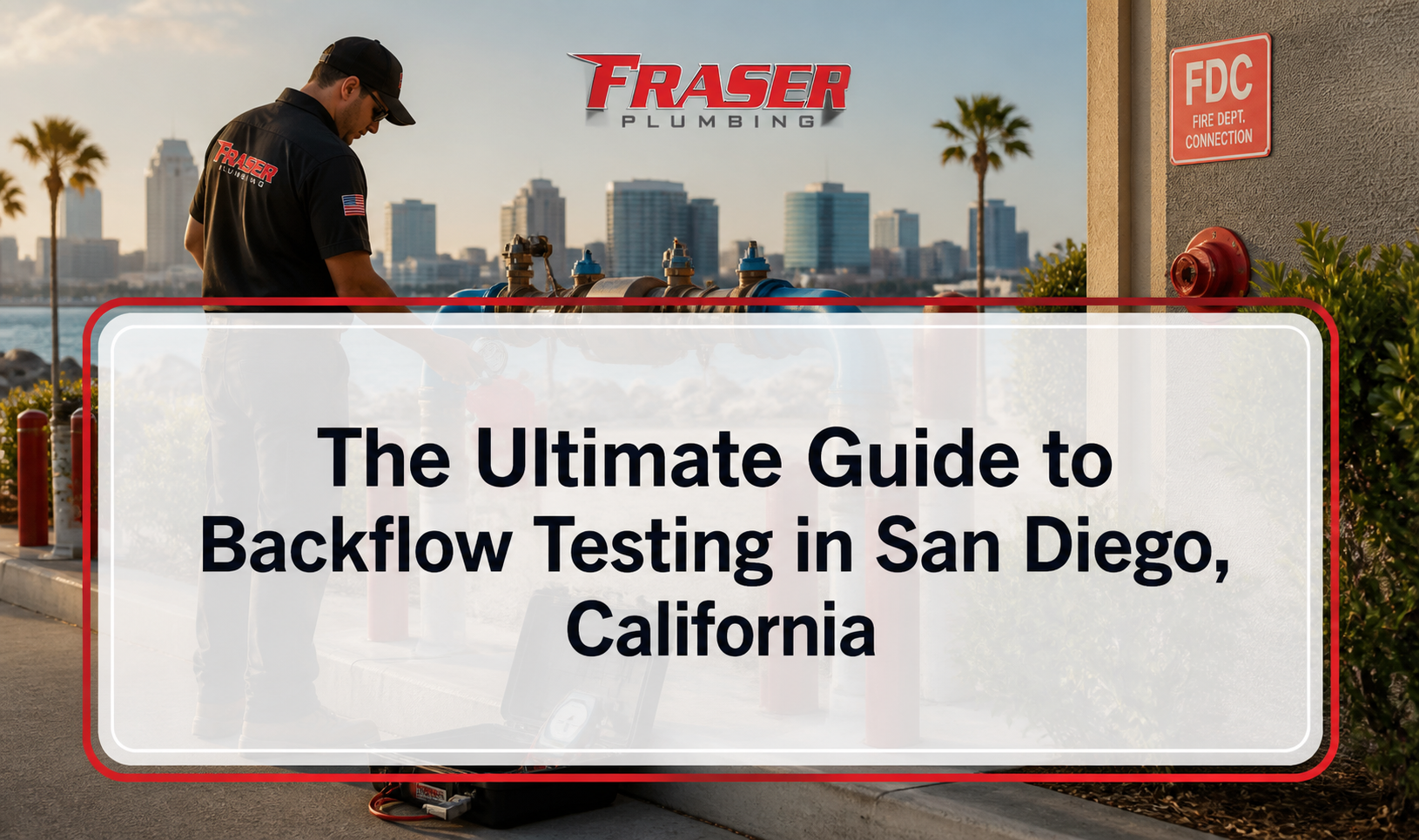
The Ultimate Guide to Backflow Testing in San Diego, California
Executive Summary
Backflow Testing San Diego is a certified, device-specific field performance test that documents whether RP, DC, and PVB assemblies are actively preventing backpressure and backsiphonage from contaminating the public potable water supply. In San Diego-area water systems, annual testing and proper reporting are primarily compliance requirements, and failures typically require approved repair or replacement followed by a passing retest report.
- Testing Is Assembly-Specific: A backflow test verifies the internal checks/relief or air-inlet functions of a testable assembly at the time of testing, not the overall condition of the plumbing or irrigation system.
- Compliance Drives Frequency and Paperwork: Local water purveyors commonly require annual testing with complete device identification, accurate readings, and certified tester credentials, and incomplete reports are often rejected.
- Most Failures Are Mechanical and Correctable: Common fail causes—debris on checks, worn elastomers, fouled relief valves, or bad shutoffs—are typically resolved by cleaning, rebuilding with approved parts, or replacement followed by retesting and finalized documentation.
Backflow testing is a certified cross-connection control inspection that verifies a backflow prevention assembly is stopping contaminated water from reversing into the public drinking water supply. Backflow Testing San Diego typically means an annual field test performed by a state-certified tester and documented for local water purveyors in the City of San Diego, Chula Vista, National City, La Mesa, El Cajon, and surrounding service areas. Common testable devices include reduced pressure principle assemblies (RP), double check valve assemblies (DC), and pressure vacuum breakers (PVB) installed on irrigation, fire lines, commercial kitchens, medical labs, car washes, and multi-tenant properties. A standard test uses calibrated differential pressure gauges to confirm check valve “tightness,” relief valve opening points on RP units, and proper shutoff valve function, then records pass/fail readings by check number and serial number. Typical on-site examples include an RP near a commercial water meter in a ground box in Mira Mesa, a PVB feeding a slope irrigation zone in Clairemont, or a DC serving a fire sprinkler line at a warehouse in Otay Mesa, each requiring clear access, intact test cocks, and controlled shutoff to avoid pressure spikes. Failed tests often trace to debris on the #1 check, worn check rubber, a fouled relief valve, or missing air gaps at hose bibbs, and corrections may require cleaning, rebuilding with approved parts, or full replacement followed by a retest and finalized report.
What Backflow Testing Covers (And What It Doesn’t)
Backflow prevention testing is a functional performance test of specific, testable assemblies—not a general plumbing inspection. It verifies that internal check valves and relief components operate within manufacturer and water-agency acceptance criteria at the time of the test.
In practical terms, a certified tester is evaluating whether the assembly can stop two recognized backflow conditions:
- Backpressure (downstream pressure becomes higher than supply pressure, pushing water backward)
- Backsiphonage (supply pressure drops, pulling downstream water back toward potable lines)
What the test does not include is repairing irrigation leaks, rebuilding valves without authorization, diagnosing every pressure problem in the building, or changing the type of assembly required. Those are separate corrective actions that may follow a failed test or a cross-connection survey requirement.
Why Annual Testing Is Required in San Diego-Area Water Systems
Annual testing is primarily a compliance requirement tied to cross-connection control programs used by local water purveyors. The purpose is documented protection of the public potable distribution system from contamination hazards.
In California, cross-connection control requirements are administered through local water suppliers and grounded in statewide public health and plumbing frameworks, including:
- California Code of Regulations, Title 17 (historically governing cross-connection control program elements and containment practices)
- California Plumbing Code (CPC) provisions addressing backflow prevention, installation criteria, and approved devices
- Local water purveyor policies (device test frequency, reporting method, and enforcement timelines)
For many commercial, multi-family, and mixed-use properties in San Diego County, the local purveyor issues a test notice on a schedule (often annually) and expects a passing field test report from a recognized certified backflow tester.
Common Testable Assemblies and Where You’ll See Them
Most test requests involve a small set of assemblies that can be field-tested using differential pressure gauges. Each device type corresponds to a hazard level and use case, and the installation environment affects reliability and access.
Reduced Pressure Principle Assembly (RP)
An RP is typically used where there is a high hazard or potential for contaminants that could threaten health. It includes two check valves and a relief valve that discharges to atmosphere when protection is compromised.
- Typical locations: commercial meters, process water feeds, restaurants, medical/dental, chemical or reclaim exposure areas
- What’s verified: #1 check differential, relief valve opening point, #2 check differential, shutoff valve function
- Common issues: relief valve fouling, debris at check seats, internal wear causing discharge or failed readings
Double Check Valve Assembly (DC)
A DC is commonly used for lower-to-moderate hazard containment where a relief-to-atmosphere is not required. It relies on two check valves to prevent reverse flow.
- Typical locations: fire service lines (where permitted), commercial services without high-hazard processes, some irrigation containment requirements
- What’s verified: #1 and #2 check “tightness” via differential readings, shutoff valves, test cocks
- Common issues: check spring fatigue, scoring on seats, debris intrusion after main work
Pressure Vacuum Breaker (PVB)
A PVB is designed primarily for backsiphonage protection on irrigation and similar systems. It is not intended to protect against backpressure in the same way as RPs used for high hazard containment.
- Typical locations: above-ground irrigation risers, landscape zones, slope irrigation
- What’s verified: air inlet opening point, check valve function, shutoffs and test cocks
- Common issues: freeze/UV degradation, vandalism, bonnet damage, leaking poppet components
How a Certified Field Test Is Performed (Step-by-Step)
A field test follows a defined sequence to avoid false readings and to protect the device from pressure shock. The tester uses calibrated differential pressure test equipment and documents readings by check number, device model, and serial number.
- Confirm device identity (type, size, model, serial number, location match to purveyor notice).
- Verify site readiness (clear access, no flooded box, test cocks intact, downstream conditions safe for shutdown).
- Stabilize system by slowly operating shutoff valves and confirming gauge connections won’t draw debris.
- Connect gauge and hoses to the correct test cocks in the correct order for that assembly type.
- Run the test sequence specific to RP, DC, or PVB:
- Check valve differential pressure (“tightness”)
- Relief valve opening point for RPs
- Air inlet function for PVBs
- Shutoff valve holding capability (as required by procedure)
- Record results clearly with pass/fail determination and numerical readings.
- Restore service slowly to reduce water hammer and verify the assembly returns to normal operation without continuous discharge (RP) or leakage.
- Submit report according to the local water purveyor’s accepted method and timeframe.
Local Reporting Expectations: What Water Purveyors Typically Require
San Diego-area water agencies generally require complete device identification and test results, submitted by an approved tester in an accepted format. Missing identifiers are a common reason reports are rejected or marked incomplete.
- Device identification: manufacturer, model, size, serial number, and installation location
- Test data: readings for each check/relief component required by that device’s procedure
- Tester credentials: proof of current certification and tester ID where applicable
- Status: pass/fail plus notes on visible deficiencies (damaged test cocks, missing caps, submerged assembly, etc.)
If your property has multiple assemblies (irrigation + fire + domestic), each assembly is usually treated as a separate compliance item with its own report line entry.
Key Specifications and Field Constraints (San Diego Context)
Backflow assemblies must be testable, accessible, and installed to remain serviceable without creating new hazards (like flooding vaults or obstructing relief discharge). The biggest local practical constraints are access, drainage, and valve operability at the meter or fire riser.
| Feature / Metric | Specifications | Local Guidelines |
|---|---|---|
| Test frequency (typical) | Periodic field testing by certified tester; frequency set by hazard classification and purveyor program | Many San Diego County water purveyors notify for annual tests on containment assemblies (verify your specific notice and due date) |
| RP relief valve discharge | Relief valve must open at its specified set-point; discharge must be able to drain safely without submergence | Do not allow RPs in pits/vaults where relief can be submerged; maintain drainage and clearance so discharge is visible and safe |
| Access and shutoff control | Assembly must be reachable for gauge hookup; shutoff valves must operate without seizure | Provide clear working space at meter boxes, irrigation backflow enclosures, and fire risers; locked cages require onsite access coordination |
| Test equipment accuracy | Differential pressure gauge must be appropriate for backflow testing and maintained to ensure accurate readings | Water purveyors can reject questionable reports; using maintained/calibrated test gauges supports defensible compliance documentation |
Why Devices Fail: Concrete Failure Modes Seen in the Field
Backflow assemblies fail for mechanical reasons that can be observed and corrected—most commonly debris, elastomer wear, or internal corrosion. Knowing the failure mode speeds up repair and reduces retest cycles.
- Debris on check valve seating surfaces after utility work, meter swaps, or main shutoffs; causes check “weep” and low differential readings.
- Worn check rubber or poppets from age, chloramine exposure, or high cycling; prevents tight seal.
- Relief valve fouling (RP) due to scale or grit; can cause nuisance discharge or failure to open at correct point.
- Damaged or missing test cocks that prevent proper gauge hookup or cause leaks at the test port.
- Shutoff valves that don’t fully close which makes it impossible to test accurately and may require valve service.
- Improper installation environment such as submerged vaults, insufficient clearance, or discharge blocked by landscape modifications.
What Happens After a Failed Test (Repair, Retest, and Documentation)
A failed result is not the end state; it triggers corrective action and a retest to restore compliance. Water purveyors typically require a passing retest report after repairs or replacement.
Standard corrective pathway:
- Identify the failing component (e.g., #1 check, #2 check, relief valve, air inlet).
- Perform an approved repair using manufacturer-specified parts kits for that model, or replace the full assembly when rebuilding is not cost-effective or the unit is obsolete.
- Retest immediately after repair to confirm passing readings under the same field conditions.
- Submit final passing documentation with updated notes (repair performed, parts replaced, any installation corrections).
Where the failure is tied to installation violations (for example, discharge submergence risk or missing air-gap protection at nearby hose connections), the fix may include reconfiguring piping, adding proper separation, or relocating the assembly to meet enforceable installation requirements.
Preparing Your Site to Pass the Test (Owner/Manager Checklist)
Most failed or rejected test appointments are caused by access, isolation problems, or missing device information—not the check valves themselves. A short pre-visit checklist reduces shutoff risk, avoids tenant disruption, and keeps the report acceptable to the water district.
- Clear physical access to the assembly and test cocks (remove storage, trim vegetation, open meter/backflow lids).
- Confirm valves operate (stuck shutoffs can stop testing and may require separate repair work).
- Coordinate shutdown windows for restaurants, clinics, and multi-tenant buildings.
- Verify device tags/IDs are readable (serial number is critical for reporting).
- Ensure drainage around RPs (relief discharge must not flood enclosures or create slip hazards).
- Notify fire/life safety contacts before work on fire line backflow assemblies to follow facility procedures.
Related Plumbing Issues That Can Mimic Backflow Symptoms
Not every pressure fluctuation or discolored water event is a backflow failure. Some symptoms originate from blockage, scale, or hydraulic conditions elsewhere in the plumbing system.
- Sudden pressure drops: may be a failing pressure regulator, partially closed valve, or system demand surge.
- Recurring debris: could indicate upstream pipe scale, aging galvanized sections, or mainline disturbances.
- Slow restoration after shutoff: can be linked to clogged strainers, blocked meter screens, or downstream restrictions.
If a site shows repeated check fouling or unstable pressures, it often makes sense to schedule a targeted diagnostic such as a General Plumbing evaluation to isolate the source condition before it causes repeated backflow retests.
San Diego Property Types That Commonly Need Testing
Testing is most frequently triggered by containment requirements tied to the service connection serving a regulated use. If your property matches one of these profiles, it’s likely to be in a purveyor testing program.
- Multi-family complexes and HOA common areas with irrigation, pools, or shared mechanical rooms
- Restaurants and commercial kitchens with chemical dispensers, pre-rinse units, or specialty equipment
- Medical / dental / laboratory suites due to elevated cross-connection risk
- Car washes and detail facilities with reclaim, detergents, or process connections
- Warehouses with fire sprinkler services where the fire line includes a testable backflow assembly
For additional context on local service coverage and common compliance needs in nearby neighborhoods, see trusted plumbing partner in Bay Park.
Practical Standards That Govern Plumbing Safety
Backflow prevention is one component of broader plumbing health-and-safety regulation. Understanding how it fits into the overall system helps owners manage risk and compliance systematically.
Plumbing systems are designed to protect potable water and remove waste safely, and backflow assemblies exist to keep nonpotable liquids from entering drinkable distribution lines. A concise overview of the discipline and its public health role is provided here: Plumbing.
Keep Your Water Supply Defensible: Testing, Repairs, and Recordkeeping
Backflow prevention testing is a documented verification that your containment assemblies work under field conditions and meet water purveyor compliance requirements. The fastest route to passing reports is maintaining access, ensuring operable shutoffs, and addressing failures immediately with approved repairs and retesting.
For San Diego-area commercial and multi-unit properties, treat backflow compliance as an operations item—not a one-off emergency. Maintain a device list (type/size/serial/location), schedule tests before the due date, keep prior reports on file, and correct installation or drainage issues that repeatedly compromise results. This approach minimizes service interruptions, reduces retest cycles, and provides clean documentation if the water purveyor audits your site.
Frequently Asked Questions
Schedule Your Backflow Test Before a “Simple” Compliance Issue Turns Into a Shutdown
Backflow testing isn’t a DIY checkbox—and it’s not just “hook up a gauge and see what happens.” One wrong sequence, a stuck shutoff, or a rushed restart can trigger water hammer, damage an aging assembly, or create a messy relief discharge problem that floods a box and turns into an emergency call. And if the report is missing a serial number, uses the wrong procedure, or gets submitted incorrectly, your water purveyor may reject it—putting you right back on the clock with warnings, fees, or service interruption risk.
Property managers and business owners feel it fast when this goes sideways: tenants lose water, operations pause, irrigation schedules get disrupted, fire line coordination becomes a headache, and suddenly you’re juggling retests and repair approvals under a deadline you didn’t create. The real risk isn’t just a “failed test”—it’s the downtime, the compliance exposure, and the avoidable second visit because the device wasn’t accessible, identifiable, or testable on arrival.
Get it handled by a local pro who knows the device types, the pass/fail criteria, and what San Diego-area water agencies expect on the paperwork. We’ll help confirm device ID, perform the correct certified field test, document readings clearly, and guide you through repairs and retesting if anything fails—so you can stay compliant without disrupting your property.
Related Posts
Expert Same Day Emergency Plumber Services in San Diego, California
Executive Summary Same day emergency plumber services in San Diego are defined by rapid hazard…
Expert Solutions for Pipe Replacement in San Diego, California
Executive Summary Pipe Replacement San Diego is the definitive long-term fix when water, drain, sewer,…