


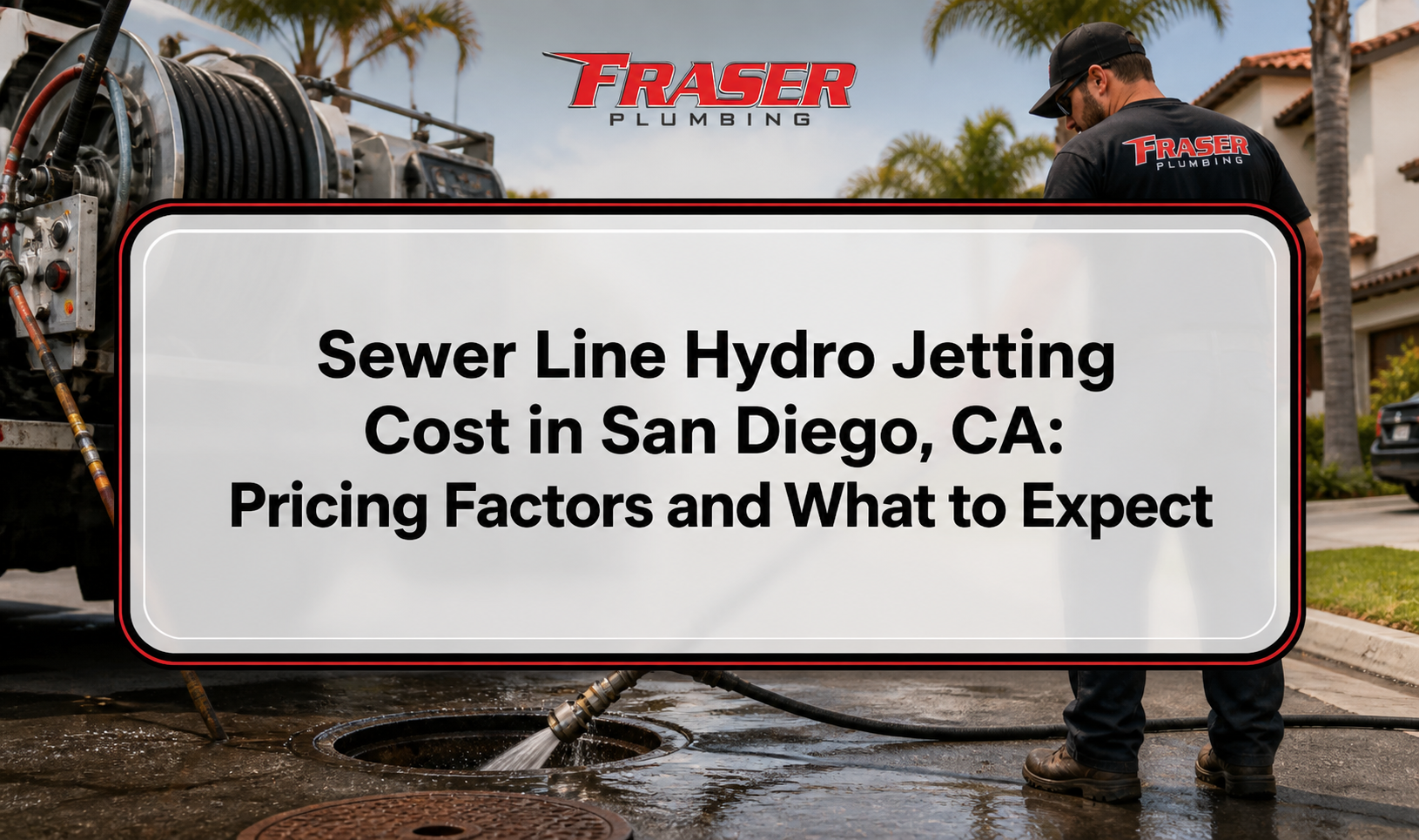
Sewer Line Hydro Jetting Cost in San Diego, CA: Pricing Factors and What to Expect
Key Takeaways
Sewer line hydro jetting cost San Diego property owners should expect is usually driven by access, pipe condition, blockage type, and how much time and how many passes are needed to restore flow. Because jetting is powerful but not a structural repair, many situations benefit from clarifying what’s included in the estimate and whether a camera inspection is recommended to reduce risk in fragile lines.
- What estimates usually include: Most hydro jetting appointments cover an initial assessment, equipment setup, active jetting time, and verification that drainage improves, with camera confirmation or cleanout work sometimes bundled or billed separately.
- What drives price variability: Pricing commonly changes based on clog severity (grease, roots, scale, debris), pipe length/diameter and layout, and cleanout accessibility—especially if the cleanout is buried, blocked, missing, or requires extra steps before jetting can begin.
- Limits and when to inspect first: Hydro jetting cleans buildup but does not rebuild failing pipe, so older or repeatedly backing-up lines may warrant a camera inspection first to identify issues like collapse, offsets, or severe corrosion where jetting might not be the safest first step.
The sewer line hydro jetting cost San Diego homeowners and property managers can expect typically depends on the severity of the clog, the pipe’s length and diameter, and how easy the cleanout is to access. Hydro jetting uses a specialized nozzle to blast high-pressure water through the line to remove grease, roots, scale, and other buildup more thoroughly than many snaking methods.
Pricing is often affected by practical job conditions, such as whether the plumber needs to locate or clear an accessible cleanout, confirm the blockage with a camera inspection, or manage heavy debris that requires multiple passes. In older or fragile piping, technicians may recommend inspecting the line first to reduce the risk of worsening an existing crack or collapse.
This guide breaks down common pricing factors in San Diego, what’s typically included in an estimate, and what to expect before, during, and after a hydro jetting service call.
What San Diego Hydro Jetting Estimates Usually Include
Most sewer line hydro jetting appointments include an initial assessment, equipment setup, active jetting time, and confirmation that flow is restored. Some estimates also bundle add-ons like camera verification or cleanout work, so it’s important to confirm what’s included before scheduling.
Because every drain system is different, many plumbers quote a range after asking a few basic questions (property type, symptoms, prior backups, known cleanout location). From there, the scope typically becomes clearer once the technician arrives and can evaluate access, line condition, and the likely cause of the blockage.
- Basic diagnostic review: discussion of symptoms (slow drains, gurgling, recurring backups, sewer odors) and where they show up.
- Site access check: finding the best entry point (main cleanout, roof vent in some situations, or a yard cleanout).
- Hydro jetting service: high-pressure cleaning with a sewer-appropriate nozzle to remove buildup and restore interior pipe diameter.
- Operational verification: checking fixtures, running water, and confirming improved drainage performance.
- Cleanup: managing overspray risk and leaving the work area orderly (especially important in garages, basements, or finished spaces).
In many cases, a Sewer Camera Video Inspection is recommended either before jetting (to reduce risk in fragile lines) or after jetting (to confirm the line is thoroughly cleaned and identify structural defects that cleaning won’t solve).
Key Pricing Factors That Influence Sewer Line Hydro Jetting Cost in San Diego
The sewer line hydro jetting cost San Diego property owners see on an invoice is usually driven by access, pipe condition, blockage type, and the amount of time and passes required to clean the full line. The more unknowns or obstacles a technician has to work through, the more variable pricing becomes.
Severity and Type of Clog (Grease, Roots, Scale, or Debris)
Different blockages respond differently to jetting, and some require more time, specialized nozzles, or repeated passes. Grease and sludge can take longer to emulsify and flush, while roots may require careful cutting and follow-up to remove residual fibers.
- Grease buildup: common in kitchen lines and multi-unit properties; may require hot water capability or extended jetting time.
- Root intrusion: often found in older clay or concrete pipe; jetting can clear roots, but it can’t repair the joint or crack that allowed entry.
- Scale/mineral deposits: can narrow older metal lines and reduce flow; cleaning may improve performance but may reveal corrosion.
- Foreign objects: wipes, hygiene products, toys, construction debris; may not always be fully resolved by jetting alone if items are lodged.
Pipe Length, Diameter, and System Layout
Longer main lines and larger diameters can require more setup, different jetting equipment, and more time to reach the city connection or lateral end. Homes with multiple bends, offsets, or transitions (such as cast iron to ABS) can also increase cleaning complexity.
For example, a short, straight run from an easily accessed outdoor cleanout is usually simpler than a long lateral that runs under hardscape with multiple direction changes and limited access points.
Cleanout Location and Accessibility
Access is one of the biggest practical drivers of cost because it affects labor time and the ability to safely control water and debris. If a main cleanout is buried, blocked by storage, or missing entirely, the technician may need extra steps before jetting begins.
- Easy access: exterior ground-level cleanout with working cap and space for equipment.
- Moderate access: garage cleanout, tight side yard, landscaping obstacles, or long hose runs.
- Difficult access: buried/covered cleanout, unknown cleanout location, or restricted commercial access windows.
Whether a Camera Inspection Is Needed Before Jetting
Hydro jetting is powerful, so responsible technicians often recommend inspecting first if the line is old, repeatedly backing up, or suspected to be compromised. A camera can help confirm whether jetting is appropriate or whether a collapse, heavy offset, or severe corrosion is present.
If a line is already cracked or partially collapsed, jetting may not be the safest first step. In those cases, the “cost” isn’t just the service fee—it’s the risk of turning a manageable clog into a more urgent repair if the underlying pipe is failing.
Hydro Jetting vs. Snaking: When Each Option Makes Sense
Snaking and hydro jetting can both restore flow, but they don’t provide the same level of cleaning. Jetting is designed to scour buildup from the pipe walls, while snaking is often best at punching through a single obstruction to re-open a pathway.
| Method / Scenario | What It Typically Does Best | When San Diego Properties Often Choose It |
|---|---|---|
| Drain snaking (cable auger) | Breaks through localized clogs; can retrieve or snag some obstructions | First-time backups, simple bathroom clogs, or when quick restoration is the immediate goal |
| Hydro jetting (high-pressure water) | Cleans pipe walls; removes grease, sludge, soft scale, and root debris more thoroughly | Recurring backups, heavy grease buildup, or maintenance cleaning for long laterals and multi-unit buildings |
| Camera-first approach | Identifies collapses, offsets, root intrusion points, and severe corrosion before cleaning | Older homes, clay/cast iron lines, repeated stoppages, or any time pipe condition is uncertain |
| Repair/rehab (if damage is found) | Addresses structural failure that cleaning cannot solve | When inspections show a belly, collapse, severe offset, or persistent root entry that keeps returning |
If you’re primarily dealing with recurring stoppages, slow drains across multiple fixtures, or grease-heavy usage, hydro jetting is often considered because it targets the buildup that causes repeat issues. For general information about how household piping and drainage systems work, you can also reference plumbing fundamentals.
What to Expect During the Hydro Jetting Process
Hydro jetting is usually a straightforward service call, but it’s more involved than “just spraying water” because technicians manage pressure, nozzle selection, flow direction, and debris removal. A typical appointment follows a predictable sequence so the line is cleaned safely and thoroughly.
Step-by-Step: Typical Sewer Line Jetting Workflow
Most plumbers follow a set workflow that starts with access and ends with verification. The exact steps vary depending on whether the property is residential, commercial, or multi-unit.
- Confirm the best access point: identify and open the main cleanout; protect the area from splash and debris.
- Optional camera inspection: locate the blockage and evaluate pipe condition, offsets, or root intrusion points.
- Select nozzle and pressure strategy: different heads are used for grease, roots, or general descaling passes.
- Jetting passes: run controlled cleaning passes to break up buildup and flush debris downstream.
- Flow test: run water from key fixtures to ensure normal drainage and confirm the backup is resolved.
- Post-clean confirmation (optional): camera re-check to verify the line is clean and identify repairs if needed.
How Long It May Take
Timing depends on access, blockage type, and how much line needs to be cleaned. A simple job can be completed relatively quickly once access is established, while heavy grease, extensive roots, or long laterals may require additional time and multiple cleaning passes.
If the technician needs to locate a cleanout, perform an inspection, or address recurring backups across multiple branches, you should expect the appointment to run longer than a basic “one drain” service call.
Risks, Limitations, and When Jetting Might Not Be the Best First Step
Hydro jetting is highly effective, but it isn’t a cure-all—and it can be the wrong choice if a sewer line is structurally failing. The safest approach is based on what the pipe is made of, how old it is, and whether there are warning signs of collapse.
Jetting cleans; it does not rebuild. If a pipe has a belly (low spot holding water), severe misalignment, or a crushed section, water pressure may restore temporary flow but the underlying problem will persist.
- Fragile or deteriorated piping: older cast iron with advanced corrosion, Orangeburg, or severely compromised clay may require inspection first.
- Suspected collapse or major offset: signs include frequent total stoppages, sewage seepage, or backups that return almost immediately.
- Heavy root intrusion: clearing is possible, but recurring root growth often indicates the need for repair at the entry point.
- Improper access: if there’s no safe cleanout, a technician may recommend adding one before jetting.
If inspection shows damage that cleaning can’t resolve, repair options may be discussed, including Trenchless Sewer Repair when appropriate for the site and pipe condition.
How to Get an Accurate Quote (and Avoid Surprise Add-Ons)
The easiest way to narrow down sewer line hydro jetting cost San Diego homeowners should budget for is to share the right details upfront and ask what the estimate includes. Transparent quoting usually comes from clarifying scope: access, inspection, cleaning distance, and verification.
Information to Share When Scheduling
Providing details helps the plumber show up with the right equipment and a realistic scope of work. Even small details—like where the cleanout is located—can affect the final quote.
- Whether the backup affects one fixture or multiple (toilet, tub, shower, kitchen, laundry)
- How often the clog returns and how recently it was last cleared
- Any known history of roots, old clay lines, or previous repairs
- Cleanout location (if known) and whether it’s buried or behind stored items
- Whether the property is a single-family home, condo, apartment building, or commercial site
Questions to Ask Before Approving the Work
A few direct questions can clarify what you’re paying for and what happens if the clog is more complex than expected. This is especially important for property managers who need predictable outcomes and documentation.
- Is a camera inspection included, optional, or recommended in my situation?
- Does the estimate include locating/exposing the cleanout if it’s buried?
- What happens if the line is collapsed or damaged and can’t be fully jetted?
- Will you verify results with a flow test or post-jet camera check?
- Is there anything I should do before arrival (clear access, stop using water, move vehicles)?
Maintenance Planning for Homes, Rentals, and Multi-Unit Properties
Hydro jetting is often used both as an emergency service and as preventive maintenance, particularly in properties with repeat clogs. Planning ahead can reduce after-hours emergencies and water damage risk, especially for buildings with shared drain lines.
Restaurants and commercial kitchens often schedule more frequent drain maintenance due to grease load, while older residential neighborhoods may see more root-related issues depending on landscaping and pipe age. The right interval varies, so it’s better to base decisions on symptoms and inspection findings rather than a fixed calendar rule.
- Signs you may benefit from preventive jetting: recurring slow drains, frequent snaking, gurgling sounds, and periodic sewage odors.
- Higher-risk scenarios: heavy cooking grease, large households, older clay laterals, and properties with mature trees near the sewer path.
- Documentation needs: property managers may want before/after notes, camera snapshots, or service logs for tenant and owner records.
For ongoing building oversight and coordinated maintenance scheduling, Property Management support can be helpful when multiple units share the same drainage infrastructure and stoppages affect more than one resident.
Practical Ways to Reduce the Chance of Future Sewer Backups
After hydro jetting restores flow, the next goal is keeping the line clear as long as possible. A few usage habits and periodic checks can slow the return of grease, debris, and root-related problems.
- Keep grease out of drains: let cooking fats cool and dispose in the trash rather than rinsing into the kitchen line.
- Use strainers: catch hair and food scraps to reduce buildup in branch lines.
- Be cautious with “flushable” products: many can snag and accumulate in bends, especially in older systems.
- Address small issues early: repeated slow drains can signal growing buildup before a full backup occurs.
- Consider periodic inspection: camera checks can identify root entry points or bellies that cause chronic stoppages.
If you want a deeper look at how jetting supports ongoing drain performance, the guidance in 5 benefits of hydro jetting for effective drain cleaning in San Diego can help you decide whether cleaning on a maintenance basis makes sense for your property.
Choosing the Right Next Step After Jetting: Clean, Inspect, or Repair
The best outcome is not just a temporarily open line—it’s knowing why it clogged and what it will take to keep it flowing reliably. After hydro jetting, the next step typically depends on whether the clog was a one-time event or a symptom of an ongoing structural issue.
If backups were caused by grease, sludge, or routine buildup, improved habits and occasional maintenance may be enough. If roots, offsets, or pipe deterioration are involved, a camera inspection and a repair plan may provide a more lasting solution than repeated emergency calls.
- If flow is restored and the pipe looks sound: consider a maintenance schedule based on usage and prior history.
- If roots return quickly: plan for inspection to locate entry points and evaluate repair options.
- If the line is damaged: discuss rehabilitation or replacement strategies based on access, landscaping, and long-term cost considerations.
Frequently Asked Questions
Get Clarity on Your Sewer Line Before You Commit to Hydro Jetting
If you’re dealing with slow drains, repeat backups, or suspected roots and grease buildup, a targeted hydro jetting visit can help restore flow and reduce recurring problems—especially when the plan is based on your pipe’s access and condition.
Because pressure, pipe material, and cleanout accessibility all affect both results and risk, it’s smart to discuss what’s included up front (inspection, cleanout locating, verification). A straightforward conversation can help you understand the likely scope and decide on the next best step for your property.
Related Posts
Tree Roots in Sewer Line: Signs, Risks, and Repair Options in San Diego, CA
Key Takeaways Tree roots in a sewer line in San Diego typically exploit existing cracks…

Commercial Drain Cleaning in San Diego, CA: Methods, Costs, and What to Expect
Key Takeaways Commercial drain cleaning San Diego service is typically aimed at restoring full pipe…