



Top-Rated Plumbers Who Work with HOAs in San Diego, California
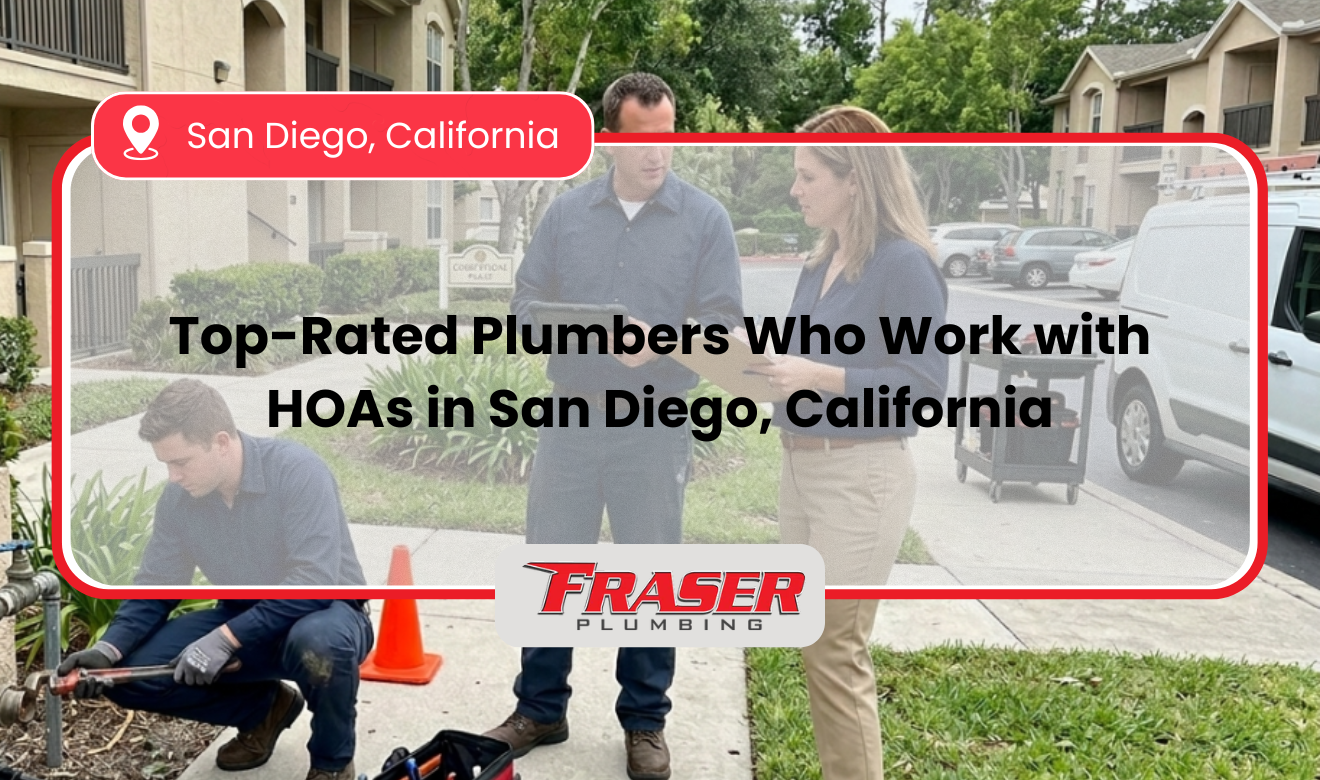
Executive Summary: Top-rated plumbers who work with HOAs in San Diego are licensed and insured contractors who can manage multi-unit systems, coordinate shutoffs and access across occupied buildings, and deliver board-ready documentation that aligns work to common-area responsibility. The definitive standard is a contractor who reduces disruption and liability through precise isolation planning, code-aware repairs (including permits/testing when required), and a complete closeout package for HOA records.
- Verify Eligibility and Risk Coverage: HOAs should confirm an active CSLB plumbing license (commonly C-36), general liability, and workers’ compensation (when applicable) before approving any common-area plumbing work.
- Match Scope to Common-Area Responsibility: The best HOA plumbers document which lines and valves were involved and help clarify whether the failed component appears to serve one unit or multiple units, supporting proper authorization and payment decisions under the CC&Rs.
- Run a Repeatable Multi-Unit Workflow: HOA-experienced plumbers plan and test shutoffs, coordinate resident notice windows, stage work to shorten downtime, and provide photos/testing notes/repair logs that protect the association and reduce repeat incidents.
Top-rated plumbers who work with HOAs in San Diego are licensed, insured plumbing contractors experienced in multi-unit systems, HOA approval workflows, and documentation required for common-area repairs. The best plumbers who work with HOAs in San Diego know how to coordinate with property managers, on-site maintenance teams, and board members. They also understand responsibility boundaries between unit plumbing and common-area piping. They routinely service shared vertical stacks, building main shutoffs, pressure-reducing valves, and backflow assemblies in condo and townhome communities. They can schedule water shutoffs with proper notice windows. They can isolate risers to limit impact to specific lines or buildings. They provide written scopes of work, before-and-after photos, and repair logs for HOA records.
What HOAs Should Require Before Hiring a Plumbing Contractor
Summary: HOA plumbing work in San Diego should start with license verification, insurance review, and a clear scope that matches common-area responsibility. Reputable contractors provide documentation that supports board decisions and property management recordkeeping.
Before any proposal is accepted, HOA boards and community managers should confirm the contractor is legally eligible to contract for plumbing in California and properly insured for multi-unit risk. At a minimum, verify:
- California contractor licensing: Confirm an active license through the Contractors State License Board (CSLB) and ensure the classification covers plumbing (commonly C-36 for plumbing).
- General liability insurance: Request a certificate of insurance (COI) listing the association or management company as certificate holder when required by vendor standards.
- Workers’ compensation: Required in California when the contractor has employees. Ask for proof and verify status through CSLB where applicable.
- Permitting capability: Common-area replacements (water heaters serving multiple units, building supply piping, certain gas work) frequently require permits and inspections under the California Plumbing Code (Title 24, Part 5) as adopted locally.
- Documentation readiness: The best HOA-focused plumbers supply written scopes, valve maps (when available), photo logs, and completion notes suitable for meeting minutes and maintenance files.
Understanding “Unit vs. Common Area” Plumbing Responsibility in Condos and Townhomes
Summary: Responsibility boundaries control who authorizes work and who pays for it. In practice, the dividing line often centers on whether piping serves one unit exclusively or multiple units/common facilities.
Most HOA governing documents (CC&Rs) define what the association maintains versus what the homeowner maintains, and those definitions must guide plumbing decisions. While each community’s documents control, HOA plumbing disputes commonly involve:
- Shared drain/waste/vent (DWV) stacks: Vertical stacks and horizontal building drains serving multiple units are typically treated as common area or association responsibility.
- Domestic water mains and risers: Building supply trunks, risers, and isolation valves serving more than one unit are usually association-maintained.
- In-unit fixture branches: Angle stops, fixture supplies, and traps that only serve one unit are often homeowner responsibility.
- Slab leaks: If the leak is under a common slab and serves multiple units, it may be association scope; if it serves only one unit, it may fall to the owner—confirm with CC&Rs and legal counsel when needed.
High-performing contractors help by documenting which valves and lines were isolated and by stating in plain language whether the failed component appeared to be a shared element or an exclusive-use line, without providing legal advice.
HOA Plumbing Workflows That Reduce Disruption and Liability
Summary: Multi-unit repairs succeed when the plumber follows a building-safe sequence: isolate, notify, protect, repair, test, and document. This approach reduces unplanned shutoffs, water damage claims, and resident complaints.
San Diego HOA communities benefit from contractors that can operate inside a property management workflow rather than a single-family “arrive and fix” model. A practical, repeatable workflow includes:
- Pre-job walk: Identify shutoffs, PRVs, backflow assemblies, recirculation loops, and which buildings/risers are affected.
- Shutoff plan: Confirm which valves actually hold, and whether isolation is possible at the riser level to limit outages.
- Resident notification support: Provide management with the exact date/time window, impacted addresses, and water restoration timing.
- Site protection: Use drain protection, access panel dust control, and leak containment where appropriate.
- Repair + pressure test: Restore service using controlled pressurization and verify for leaks at repaired joints and nearby fittings.
- Closeout package: Provide scope completion notes, photos, invoice detail, and recommendations ranked by urgency.
Core Systems HOA Plumbers Commonly Service in San Diego
Summary: HOA plumbing is dominated by shared infrastructure: vertical stacks, main shutoffs, pressure regulation, sewer mains, and backflow prevention. The right contractor can troubleshoot these systems without unnecessary shutdowns.
Typical HOA and property management plumbing calls involve the following building components:
- Building main shutoffs: Locating, exercising, and repairing valves so future emergencies can be contained.
- Pressure-reducing valves (PRVs): Stabilizing excessive street pressure to reduce fixture failures and slab leak risk.
- Backflow prevention assemblies: Testing, repair, replacement, and compliance documentation when required for irrigation or fire-related lines (where applicable).
- Shared drain lines and sewers: Cleaning, root intrusion mitigation, and condition verification using camera inspection.
- Recirculation systems: Balancing and maintaining hot-water recirculation loops that affect multiple units’ wait times and comfort.
- Gas piping (when present): Repairs and pressure testing under applicable California code requirements and local inspection rules.
Documentation HOAs Should Expect for Board Packets and Records
Summary: HOA-ready plumbing vendors provide decision-grade paperwork. This includes a defined scope, alternatives, photos, and a record that supports future maintenance planning.
For common-area repairs, boards often need to justify cost, urgency, and vendor selection. Ask for:
- Written scope of work: What will be opened, replaced, or repaired; what is excluded; and what access is required.
- Material specifications: Pipe type (copper/PEX/CPVC where permitted), valve brand/model where relevant, and connection method.
- Before-and-after photos: Especially for leak repairs, corroded fittings, and accessible sections of common piping.
- Testing notes: Confirmation of pressure tests, leak checks, and functional verification (fixtures, drains, pumps, PRVs).
- Repair logs: Date, location (building/unit/stack), cause found, and corrective action—useful for recurring issues and reserve planning.
San Diego HOA Compliance Touchpoints: Permits, Testing, and Inspections
Summary: Common-area plumbing work frequently intersects with permitting and formal testing requirements. Contractors should be prepared to coordinate inspections and supply compliance paperwork.
While not every repair requires a permit, many replacements and system modifications do—especially when altering water heaters, gas piping, or building supply piping. Additionally, certain assemblies require periodic testing by qualified testers under local program rules. HOAs should request clarity on:
- When a permit is required: Replacement-in-kind can still require permits depending on scope and local enforcement; contractors should identify the requirement before work starts.
- Backflow testing documentation: Where a device is required, test reports are typically needed for compliance tracking.
- Water damage coordination: If a leak impacts drywall, flooring, or framing, immediate mitigation steps reduce mold risk and secondary damage claims.
For a deeper overview of the trade and system categories, see plumbing fundamentals and terminology.
HOA-Focused Service Selection: Matching the Problem to the Right Tool
Summary: The best outcomes come from selecting the service that fits the system and failure mode. Camera inspection, hydrojetting, leak detection, and repiping each solve different HOA-level problems.
Use this quick guide to align common HOA issues with the most effective service approach:
| Feature / Metric | Specifications | Local Guidelines |
|---|---|---|
| License and contracting eligibility | Active CSLB license appropriate for plumbing scope (commonly C-36) and compliant business status | Verify on CSLB before approval; require vendor to match scope (repairs vs. construction-level replacement) |
| Insurance package for multi-unit work | General liability + workers’ compensation (when employees are used); COI issued on request | HOA/property manager should keep COIs on file and align requirements with vendor contract terms |
| Drain/sewer blockage diagnosis | Camera inspection identifies root intrusion, offsets, bellies, scaling, and broken transitions | Use video files/stills for HOA records and to support board decisions on repair vs. replacement |
| High-performance drain cleaning | Hydrojetting clears grease, scale, and recurring buildup in shared lines better than basic snaking when appropriate | Confirm pipe condition with camera first to avoid jetting fragile or failed piping |
| Water pressure stabilization | PRV evaluation and replacement addresses excessive or fluctuating pressure affecting multiple units | Document pre/post static pressure readings and any thermal expansion considerations |
| Planned piping renewal | Repiping strategy (copper/PEX where allowed) coordinated by riser/building to reduce outages | Require a shutoff schedule, access plan, and restoration expectations for walls/ceilings |
How Plumbers Coordinate Shutoffs in Occupied Communities
Summary: Effective shutoff management is the difference between a controlled repair and a community-wide disruption. HOA-experienced plumbers isolate precisely, communicate clearly, and restore service predictably.
In condos and townhomes, water shutoffs affect resident health, access, and building operations. A contractor should be able to:
- Identify isolation points: building mains, branch isolation, riser valves, and unit-level stops (when functional).
- Confirm valve performance: verify that valves hold before authorizing a shutdown window.
- Stage the work: pre-cut, pre-fabricate, and stage materials to shorten downtime.
- Restore safely: refill lines slowly to reduce water hammer and loosened debris, then recheck for leaks.
Signals Your HOA May Be Approaching Repiping or Major Renewal
Summary: Repeated leaks, pinhole corrosion, chronic stoppages, and pressure instability often indicate system-wide aging—not isolated failures. Early planning reduces emergency spend and resident disruption.
Boards should treat these patterns as triggers to obtain a condition assessment and budgeting inputs:
- Recurring leaks in similar locations: repeated failures at fittings, elbows, or within the same building wing.
- Frequent slab leak claims: especially when leak history clusters by age of piping and material type.
- Chronic backup complaints: repeated stoppages in shared sewer lines even after routine cleaning.
- Evidence of corrosion or scaling: visible deterioration on accessible copper, galvanized, or older components.
If your board is evaluating whether community piping is reaching end-of-life, this overview on signs it’s time to replace your plumbing can help frame the discussion for a maintenance plan and reserve strategy.
One High-Impact Service to Add to Your HOA Maintenance Plan
Summary: Preventive diagnostics reduce emergency calls and give boards evidence for repair vs. replacement decisions. A single well-chosen service can improve both budgeting and resident satisfaction.
For many communities, the most cost-effective way to reduce repeat drain incidents is a periodic Sewer Camera Video Inspection of the main lines and known problem branches. This supports HOA decision-making by:
- Pinpointing root causes: roots, offsets, bellies, breaks, or heavy scaling.
- Reducing unnecessary work: avoids repeated snaking when a structural defect is the real issue.
- Creating a record trail: video and stills can be stored with maintenance files and shared with board members.
Choosing a Contractor That Works Smoothly With Property Management
Summary: HOA plumbing is operationally complex because access, approvals, and resident communication matter as much as the repair itself. The best vendors adapt to property management systems and escalation paths.
When comparing providers, prioritize contractors that can demonstrate:
- Work order discipline: clear dispatch notes, unit/building identifiers, and consistent invoice descriptions.
- On-site coordination: ability to work with maintenance staff for access, lockboxes, and escort requirements.
- After-hours readiness: defined emergency process for active leaks affecting multiple units.
- Clear change-order controls: written approvals when concealed conditions require expanded scope.
Board-Ready Wrap-Up: What “Top-Rated” Looks Like for HOA Plumbing in San Diego
Summary: The most reliable HOA plumbers combine code-aware workmanship with documentation, communication, and precise isolation planning. This reduces water damage exposure, keeps residents informed, and helps boards govern responsibly.
When you’re hiring plumbers who work with HOAs in San Diego, evaluate them like an infrastructure partner—not a one-time vendor. The strongest contractors consistently deliver:
- Verified CSLB licensing and proper insurance aligned to multi-unit risk
- Accurate isolation and shutoff planning to limit disruption building-by-building or riser-by-riser
- Code-aligned repairs and permit coordination when replacements or system modifications require inspection
- Diagnostic proof (camera, pressure readings, photos) that supports repair decisions
- HOA-grade closeout documentation suitable for management records and board packets
With those standards in place, HOA plumbing stops being reactive crisis management and becomes a controlled, auditable maintenance program that protects property value and resident livability.
Frequently Asked Questions
Protect Your Community From the “Small Leak, Big Claim” Scenario—Hire an HOA-Ready San Diego Plumber
In a condo or townhome community, plumbing isn’t a single-family inconvenience—it’s a shared-risk event. One rushed repair, one unverified shutoff valve, or one vague scope can trigger cascading problems: unplanned building-wide water outages, multiple unit intrusions, resident complaints, emergency after-hours callouts, and board-level liability when documentation doesn’t match what was approved.
HOA plumbing requires more than “fixing the pipe.” It requires controlled isolation, predictable shutoff scheduling, coordination with property management, code-aware repairs, and a closeout package that protects the association: written scopes, photos, testing notes, and clear records for board packets and future maintenance planning.
If you rely on a contractor who isn’t experienced in multi-unit systems, you risk paying twice—once for the repair, and again for the fallout: water damage disputes, repeated stoppages, change orders from “surprises,” and residents left without clear timelines. The right local expert reduces disruption, limits affected lines, and delivers documentation your board can stand behind.
Related Posts
Shower Drain Cleaning Service in San Diego, CA: Fast, Professional Clog Removal and Odor Control
Executive Summary A shower drain cleaning service in San Diego definitively resolves slow drainage and…

Bathroom Sink Drain Cleaning in San Diego, CA: Costs, Best Methods, and When to Call a Plumber
Executive Summary Bathroom sink drain cleaning in San Diego is most reliably resolved by mechanically…