



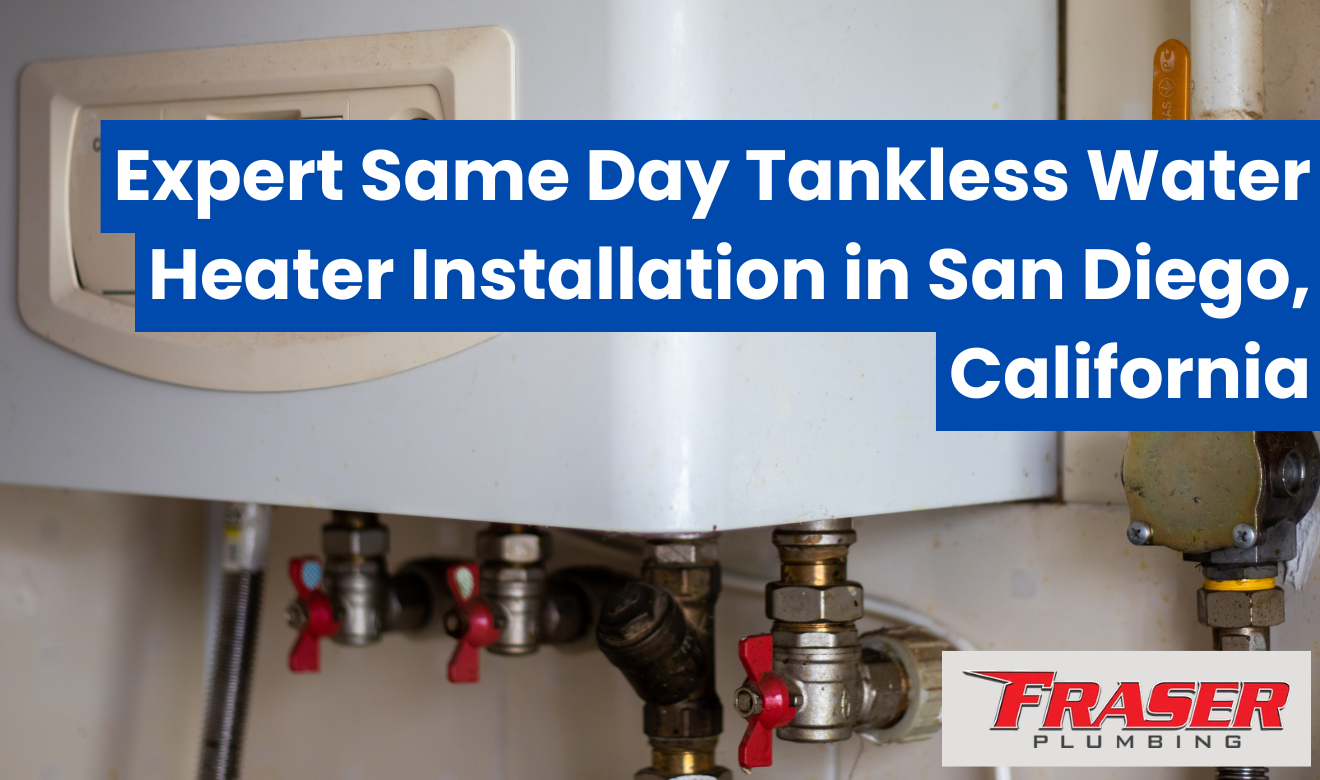
Expert Same Day Tankless Water Heater Installation in San Diego, California
Executive Summary
Same day tankless water heater installation in San Diego means restoring safe, code-compliant hot water in one visit by verifying site constraints first, completing proper gas/water/vent/electrical connections, and commissioning the system at the fixtures. It is only truly “same-day” when the home’s utility capacity (gas pressure under load, venting clearances, condensate drainage, and electrical panel capacity) can support the selected unit without unsafe shortcuts.
3 Core Insights
- Same-Day Means Commissioned, Not Rushed: A legitimate install includes verification, correct mounting and connections, leak checks, startup per the manual, safe temperature settings, and real fixture flow testing for stable hot water delivery.
- Infrastructure Limits Decide the Timeline: Undersized gas lines/meters, infeasible vent terminations, missing condensate drains (condensing units), and electrical panel constraints (electric units) are the most common reasons a “one-visit” swap becomes added scope.
- San Diego Retrofits Must Be Service-Ready for Hard Water: Full-port isolation valves and flush/service ports (often paired with a 3/4-inch cold-water supply upgrade) are key add-ons that support annual descaling and reduce temperature instability and premature heat-exchanger wear.
Same day tankless water heater installation in San Diego is a licensed plumbing service that removes or bypasses a storage tank and mounts a new on-demand unit with code-compliant gas, water, venting, and electrical connections in one visit. Homeowners requesting same day tankless water heater installation San Diego typically need immediate hot water restoration after a tank leak, a failed burner, or recurring pilot outages. Local installs often include a 3/4-inch cold-water supply upgrade, a full-port isolation valve set, and a service flush port to support annual descaling in San Diego’s hard-water areas like Mira Mesa, Rancho Bernardo, and East County. Gas models commonly require a larger gas line and verified pressure under load, especially in older North Park and City Heights homes with long meter runs. Condensing units usually need a new PVC/CPVC vent route to an exterior wall or roof, plus a condensate drain line with a neutralizer when required. Electric models often require a dedicated 240V circuit and panel capacity checks that are common in condos near Mission Valley and UTC. A proper same-day setup also includes combustion air clearance verification, seismic strapping where applicable, temperature setting to reduce scald risk, and a post-install flow test at showers and fixtures to confirm stable hot water delivery.
What “Same-Day” Tankless Installation Actually Includes (and What It Doesn’t)
Same-day tankless installation means restoring safe, code-compliant hot water service in one visit, not rushing critical sizing, venting, or gas-pressure verification. It includes removal/bypass of the tank, mounting the new unit, and completing required connections, start-up, and basic performance testing.
A legitimate one-visit install typically covers:
- Site verification: fuel type (gas/electric), existing vent path, combustion air, drain access (for condensate), and shutoff locations.
- Removal/bypass: disconnecting the storage tank safely, capping or rerouting lines, and confirming no cross-connections.
- Mechanical mounting: wall framing or backer support, clearances per manufacturer instructions, and seismic restraint methods where required by local enforcement.
- Water piping: isolation valve/service port kit, flushing ports, and a cold-water supply path sized to support fixture flow without nuisance temperature swings.
- Gas or electrical work: shutoff valve access, sediment trap (drip leg) where required, correct circuit sizing for electric units, and bonding/grounding per applicable code.
- Venting/condensate (condensing gas units): approved vent materials and terminations, slope requirements, and condensate routing to an approved drain point.
- Commissioning: leak checks, combustion/operation checks following manufacturer procedure, temperature setting, and verification at fixtures.
What “same-day” does not guarantee:
- That an undersized gas meter or long undersized gas run can be corrected without additional scope.
- That HOA/condo restrictions won’t require alternate vent routing, roof penetrations, or approvals.
- That a corroded main shutoff, failing pressure regulator, or compromised water piping won’t need separate repair before a reliable install is possible.
San Diego Permitting and Code Touchpoints That Affect Tankless Swaps
A compliant installation is driven by California and locally adopted model codes plus manufacturer instructions, which are enforceable as part of the listing and labeling. In practice, inspections focus on fuel piping, venting, seismic safety, and temperature/relief discharge rules.
Key compliance anchors commonly applied in San Diego include:
- California Plumbing Code (CPC): water piping materials/methods, relief valve discharge rules (where applicable), and general installation standards.
- California Mechanical Code (CMC): venting and combustion air provisions for fuel-burning appliances.
- California Fuel Gas Code (as adopted): gas pipe sizing methods, shutoff valve placement, sediment trap requirements, and pressure testing where required.
- California Electrical Code (CEC): dedicated circuits, conductor sizing, overcurrent protection, and bonding/grounding for electric units and powered venting.
- Manufacturer installation manual: required clearances, vent material/diameter, maximum equivalent vent length, and condensate handling (condensing models).
Local realities that frequently trigger corrections during inspections:
- Improper vent terminations too close to openings or not meeting manufacturer clearance rules.
- Missing or inaccessible gas shutoff, or a shutoff located where it cannot be reached quickly.
- Undersized gas piping that passes a static check but fails under load (pressure drop when appliances run).
- Condensate discharged to an unapproved location without appropriate routing or protection.
Pre-Install Same-Day Checklist (What a Licensed Plumber Confirms Before Mounting the Unit)
A same-day job stays “same-day” when critical constraints are checked first. The goal is to confirm that the selected heater can be supported by the home’s gas, water, vent, and electrical infrastructure.
A field-verified checklist typically includes:
- Fuel and capacity match: confirm the chosen model (gas non-condensing, gas condensing, or electric) fits the home’s available utilities.
- Water pressure and PRV status: confirm incoming pressure is stable and not excessive; failing regulators can create flow/temperature issues.
- Hard-water risk: identify scaling likelihood and ensure the install includes isolation valves and flush ports for annual descaling.
- Gas supply verification (gas units): verify pipe size, developed length, and available meter/regulator capacity; check pressure under operating load.
- Venting route feasibility: confirm legal/functional termination location and vent length limits per the manual.
- Electrical supply: confirm receptacle/circuit needs for ignition and controls (gas), or dedicated 240V capacity for electric tankless.
- Drain access (condensing): confirm a practical, protected path for condensate to an approved drain point.
- Fixture flow expectations: evaluate simultaneous demands (showers, dishwasher, laundry) and set realistic performance targets.
When any of these fail, the correct move is scope clarification—not forcing an unsafe workaround. The work must align with standard professional practice in plumbing and the enforceable listing requirements of the appliance.
Core Components Commonly Added in San Diego Tankless Retrofits
Most tank-to-tankless conversions require more than “hooking up two water lines.” The typical San Diego retrofit adds serviceability and flow stability features that reduce callbacks and protect the heat exchanger.
Common upgrades included in many installs:
- 3/4-inch cold-water supply path to the unit when the existing branch is undersized for the intended flow.
- Full-port isolation valves on cold and hot lines to allow service without shutting down the whole house.
- Flush/service ports to support vinegar or manufacturer-approved descaling procedures.
- Clean shutoff labeling so homeowners and property managers can quickly isolate the unit.
- Vibration and support details to prevent piping stress at the wall-mounted chassis.
In neighborhoods with older piping or mixed materials, it’s also common to address corroded shutoffs or compromised connectors during the same visit if parts and access allow.
Gas Tankless: Line Sizing, Pressure Under Load, and Venting Rules That Matter
Gas tankless installs succeed or fail on gas delivery and venting execution. San Diego homes with long meter runs, multiple gas appliances, or older branch sizing often require corrections before the heater can operate at full fire.
What a proper gas verification includes:
- Pipe sizing by method: sizing is based on developed length and connected load using the applicable code sizing tables and/or an approved sizing method.
- Pressure testing and “under-load” verification: static pressure alone is not enough; the check must confirm acceptable pressure while appliances operate.
- Accessible shutoff: a listed gas shutoff valve must be reachable at the appliance location.
- Sediment trap (drip leg): installed where required to protect the gas valve and burner assembly from debris.
Venting specifics that commonly impact same-day feasibility:
- Non-condensing units typically require Category III venting (often stainless steel) and strict termination rules.
- Condensing units typically use listed plastic vent systems (as specified by the manufacturer) and require correct slope and support to manage condensate in the vent.
- Termination location must follow manufacturer clearance rules to doors, windows, and air intakes; these clearances are enforced during inspection.
If you suspect the gas run is marginal (common in older North Park and City Heights layouts), it’s smart to plan for a possible gas line upgrade as part of Water / Sewer / Gas Lines Services San Diego rather than installing a unit that cannot reach rated output.
Condensing Tankless: Condensate Drain, Neutralizers, and Exterior Routing
Condensing tankless models create condensate that must be managed deliberately. A correct setup routes condensate to an approved drain point, protects finishes, and follows manufacturer instructions for treatment and disposal.
Condensate handling best-practices in residential retrofits:
- Dedicated drain path: route to a suitable receptor (often a laundry standpipe or other approved drain connection) using appropriate materials.
- Protection against damage: secure tubing/piping and avoid routing that can stain stucco, corrode metal, or create slip hazards.
- Neutralizer (when required): some jurisdictions, manufacturers, or site conditions call for a neutralizer cartridge to reduce acidity before discharge.
Because condos and townhomes may have limited drain access, condensate routing is one of the most common reasons a “simple swap” becomes a more involved same-week project.
Electric Tankless: Panel Capacity, Dedicated Circuits, and Condo Constraints
Electric tankless units are electrical infrastructure projects as much as plumbing projects. Many high-demand models require multiple dedicated 240V circuits, and panel capacity in Mission Valley/UTC-area condos can be a limiting factor.
What must be verified for electric installations:
- Dedicated 240V circuits sized to the unit’s nameplate rating and installed with proper overcurrent protection.
- Panel capacity check: available amperage and physical breaker space must support the added load.
- Conductor sizing: correct wire gauge and temperature rating for the load and installation method.
- Disconnecting means: provided as required by code/manufacturer instructions.
When panel upgrades are needed, same-day installation may be limited to making the site safe and planning coordinated electrical work.
Performance Commissioning: Temperature Stability, Scald Protection, and Fixture Testing
Commissioning is the difference between “it turns on” and “it delivers reliable hot water.” A professional startup confirms stable flow, safe temperature settings, and proper operation under realistic demand.
A practical commissioning sequence includes:
- Water-side leak check at operating pressure on all new joints and valves.
- Gas-side leak check on all disturbed fittings using approved detection method.
- Startup per manual: ignition sequence, error code check, and confirmation of proper combustion/operation indicators.
- Set outlet temperature to a safer baseline and confirm homeowner preference; higher temperatures increase scald risk.
- Flow test at fixtures: test at showers, lavs, and kitchen while other fixtures run to evaluate temperature stability and minimum activation flow.
If a home has a long hot-water run, the commissioning discussion should also address recirculation options, wait time expectations, and whether a dedicated return line exists.
Structured Snapshot: What Changes in a Typical San Diego Tank-to-Tankless Conversion
This table summarizes the most common retrofit elements that influence same-day scheduling, inspection outcomes, and long-term serviceability. Use it as a quick planning reference before choosing a unit or booking an install.
| Feature / Metric | Specifications | Local Guidelines |
|---|---|---|
| Cold-water supply sizing | Frequently upgraded to 3/4-inch to support higher fixture flow and reduce temperature hunting | Hard-water areas benefit from stable flow plus service valves for routine descaling (common across San Diego County) |
| Service isolation/flush valve set | Full-port hot/cold isolation valves with flush ports for pump-and-descaler maintenance | Strongly recommended for annual maintenance in high-mineral zones (e.g., inland neighborhoods) |
| Gas delivery verification (gas units) | Pipe sizing by developed length and total connected load; verify pressure under load | Older homes with long runs often need resizing; inspections commonly flag undersized piping and missing shutoffs |
| Venting system (gas units) | Materials and routing must match appliance category and manufacturer listing; terminations must meet clearance rules | Condensing models often allow more flexible vent routing but still require listed materials and correct termination placement |
| Condensate management (condensing units) | Drain line to approved receptor; neutralizer added when required by site/manufacturer/jurisdiction | Condos/townhomes may have limited drain access—often the biggest “same-day” constraint |
| Electrical requirements | Gas units need power for controls/ignition; electric units may need multiple dedicated 240V circuits | Panel capacity checks are essential in multi-family properties and older electrical services |
How to Choose the Right Tankless Unit for San Diego Homes (Without Oversizing or Underfeeding)
Correct selection is based on required flow at a realistic temperature rise and the home’s utility constraints. The fastest installs happen when model selection matches what the home can actually support that day.
Selection criteria that prevent misfires:
- Fuel availability: gas is often the simplest path for higher flow, but only if the gas piping and meter capacity are adequate.
- Hot-water demand profile: number of bathrooms, simultaneous shower use, and appliance overlap.
- Minimum activation flow: low-flow fixtures can affect when the unit fires; commissioning should confirm behavior at each fixture.
- Venting and drain feasibility: condensing units need a condensate path; non-condensing units may require specialized venting.
- Serviceability: prioritize models and layouts that allow filter cleaning, descaling, and access to the isolation valves.
If your property has aging supply lines or recurring pinhole leaks, it may be worth reviewing replacement planning alongside the heater decision; the article Signs It’s Time to Replace Your Plumbing explains common warning indicators that can affect water heater reliability and installation scope.
“Same-Day” Scheduling Triggers in San Diego: The Most Common On-Site Obstacles
Most delays come from infrastructure constraints, not from the water heater itself. Identifying these items early is what keeps an on-demand conversion within one visit.
Issues that most often change the timeline:
- Undersized gas line or insufficient meter/regulator capacity for full-fire operation.
- No practical vent termination that meets manufacturer clearance rules and HOA constraints.
- Condensate drain limitations in garages, interior closets, or multi-story condos.
- Electrical panel limits for electric tankless (insufficient amperage or breaker space).
- Failed shutoffs (main water valve or local valves that won’t close) requiring replacement before safe work can proceed.
A qualified installer will document the constraint, propose a compliant path forward, and avoid stopgap venting or undersized gas connections that can create unsafe operation or inspection failure.
Hot Water Restored—And Kept Restored: The Post-Install Maintenance Standard
Long-term reliability depends on routine maintenance that matches San Diego water conditions and the unit’s design. The goal is preventing scale accumulation, ignition faults, and reduced efficiency.
A baseline owner maintenance plan typically includes:
- Annual descaling/flush through the installed service ports (frequency depends on hardness and usage).
- Inlet screen/filter cleaning per manufacturer directions.
- Visual vent/termination check to ensure it remains unobstructed and intact.
- Condensate line inspection (condensing units) for kinks, blockage, and secure routing.
If the home has recurring pressure spikes or inconsistent flow, correcting the supply side (PRV, main valve, or piping issues) prevents nuisance shutdowns and extends heat exchanger life.
San Diego Same-Day Tankless Install—The Correct Standard to Demand
A same-day on-demand water heater conversion is successful when it is sized correctly, connected with code-compliant gas/water/vent/electrical work, and fully commissioned at the fixtures. The practical benchmark is stable hot water delivery, verified gas pressure under load (for gas units), correct venting/condensate routing (for condensing units), and service valves that make annual descaling straightforward in hard-water neighborhoods.
When you request rapid installation after a tank failure, prioritize installers who document constraints up front, follow California code requirements and manufacturer instructions, and complete a real start-up and fixture test—because the fastest “install” is meaningless if it can’t pass inspection or deliver consistent hot water the next morning.
Frequently Asked Questions
Need Hot Water Today? Get a Same-Day Tankless Install Done Right—Not “Fast and Risky”
When your water heater fails, it’s tempting to treat a tankless swap like a simple replacement. But tankless systems don’t forgive shortcuts—especially in San Diego homes where hard water, older gas runs, tight condo venting rules, and under-sized electrical panels can turn a “quick install” into a dangerous or expensive mess.
Here’s what can go wrong when the job isn’t handled by an experienced local pro: undersized gas piping that looks fine on paper but drops pressure under load (causing shutdowns, error codes, and weak hot water), improper vent materials or terminations that can fail inspection (or worse, create combustion safety risks), missing isolation/flush valves that accelerate scale damage in hard-water neighborhoods, and condensate routing mistakes that stain stucco, damage finishes, or violate drainage rules. And if the unit is mis-sized or commissioned poorly, you’ll feel it every day—temperature swings, long waits, and hot water that cuts out right when you need it most.
Same-day should mean safe, code-compliant, and fully tested at your fixtures—not “mounted on the wall and hope it works.” If you need hot water restored fast, choose a licensed plumber who verifies gas pressure under load, confirms venting and clearances per the manufacturer, installs service valves for future descaling, and commissions the system so it delivers stable hot water in real-world use.
Related Posts
Shower Drain Cleaning Service in San Diego, CA: Fast, Professional Clog Removal and Odor Control
Executive Summary A shower drain cleaning service in San Diego definitively resolves slow drainage and…

Bathroom Sink Drain Cleaning in San Diego, CA: Costs, Best Methods, and When to Call a Plumber
Executive Summary Bathroom sink drain cleaning in San Diego is most reliably resolved by mechanically…