



Comprehensive Guide to Hydro Jetting Services Costs in San Diego, California
Executive Summary
Hydro jetting services in San Diego cost varies primarily by measurable scope—pipe diameter, access/cleanout availability, linear footage, and the obstruction confirmed by camera—because jetting is a full-pipe cleaning process rather than a simple clog punch-through. The most reliable way to control price and outcomes is to require a defined quote backed by inspection findings and a clear verification step after cleaning.
- Scope Is Measurable: Price is driven by pipe size, access point used, total footage cleaned, and job logistics—not a flat “per clog” rule.
- Inspection Prevents Misbilling: A camera inspection clarifies whether the restriction is grease, roots, scale, sediment, or structural failure, which determines the correct method and expected run time.
- San Diego Conditions Increase Run Time: Root intrusion in clay near street trees, heavy cast iron scaling, sandy soil sediment infiltration, and missing/buried cleanouts commonly expand labor and total cost.
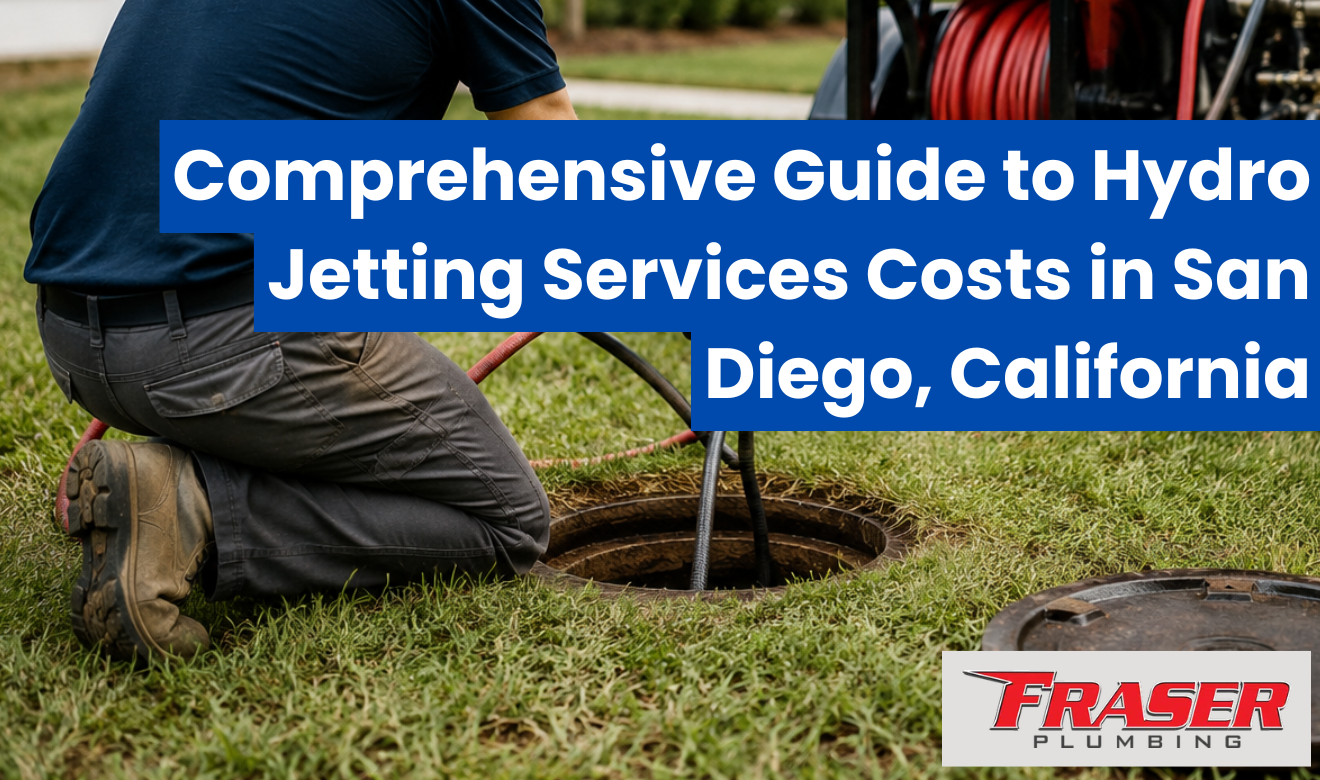
Hydro jetting is a high-pressure drain cleaning method that uses a water stream to scour pipe walls and remove blockages. In San Diego, typical hydro jetting services in San Diego cost depends on pipe diameter, access points, and the level of buildup inside the line. A 2-inch to 4-inch kitchen or laundry drain in a Mission Valley condo often needs jetting to clear hardened grease, soap scum, and food sludge. A 4-inch main sewer line at a Clairemont single-family home may require longer run time to cut through root intrusion and flush compacted sediment. Many plumbers start with a camera inspection to confirm the clog type, measure the affected footage, and locate cleanouts near garages, side yards, or exterior walls. Cost can rise when a cleanout is missing, when the line runs under a slab, or when multiple fixtures back up due to a downstream restriction. San Diego conditions that commonly change scope include sandy soil infiltration near older laterals, heavy scale in cast iron, and recurring root growth in clay pipe near street trees. This guide breaks down the main pricing drivers, what a standard jetting job includes, and how to compare quotes using pipe size, access, and documented inspection findings.
What Hydro Jetting Actually Includes (and Why It Prices Differently Than Snaking)
Hydro jetting is a full-pipe cleaning process, not just a “punch a hole through the clog” service. Pricing changes because the equipment setup, nozzle selection, and cleaning time vary widely by pipe size, material, and obstruction type.
In practice, hydro jetting uses a high-flow water jet and purpose-built nozzles to remove:
- Hardened grease and biofilm that reduces interior diameter in kitchen lines
- Soap scum and lint mats common to laundry branches
- Sand, silt, and construction debris that settles in low spots
- Scale and tuberculation inside older cast iron (often requiring slower, methodical passes)
- Root intrusion in clay or aging ABS transition points (often requiring root-cutting jet nozzles and longer run time)
Compared with a mechanical cable (auger), jetting aims to restore the pipe’s full working diameter by scouring the pipe walls. That’s why two properties with the same “backup” symptom can see different charges—one may be a short grease plug near a kitchen trap arm, while the other is a long mainline restriction with roots and sediment.
Main Cost Drivers for San Diego Jetting Jobs
Hydro jetting cost is determined by measurable job variables, not a flat “per clog” rule. The biggest drivers are pipe diameter, access, total footage cleaned, and the obstruction confirmed by inspection.
When comparing estimates, look for these line-items or scope notes:
- Pipe diameter and fixture type (typical residential branches are 2″–3″; mainline commonly 4″)
- Linear footage of affected line (longer runs and multiple bends increase cleaning time)
- Access and cleanout availability
- Existing, code-compliant cleanouts reduce labor and setup time
- Missing/buried cleanouts can require locating, excavating, or installing access before jetting
- Line condition and pipe material (cast iron scale and clay root intrusion often require additional passes)
- Severity and type of blockage verified by camera (grease vs. roots vs. collapse)
- Multi-fixture backup indicating a downstream restriction and potentially more footage to clear
- Site logistics such as parking, hose routing distance, and condo/HOA access constraints
In San Diego, scope changes frequently in older neighborhoods where laterals transition between materials (for example, ABS to clay) and where trees are established near the curb line.
San Diego-Specific Conditions That Commonly Increase Scope
Local soil conditions, older housing stock, and mature street trees create recurring, identifiable jetting patterns. Contractors adjust nozzle type, pressure, and run time based on what’s typical in specific pipe materials and neighborhood build eras.
Common local variables that affect time on task:
- Sandy soil infiltration into older laterals through failed joints or cracks, adding sediment load that must be flushed
- Cast iron scaling (interior corrosion buildup) that reduces flow and traps debris; cleaning is slower than removing a single “plug”
- Root regrowth cycles in clay or compromised joints—jetting may clear the immediate obstruction but doesn’t “repair” structural entry points
- Slab or hardscape coverage limiting access to cleanouts and increasing labor to reach a workable entry point
- Grease-heavy usage profiles in multi-unit buildings where kitchen lines see frequent loading and partial blockages
These aren’t speculative factors—they are directly observable through a sewer camera and by the debris type returning through the cleanout during flushing.
Standard Workflow: Inspection, Jetting, Verification
A professional jetting job follows a defined sequence to prevent wasted labor and to document results. The most defensible scope starts with locating the blockage and ends by confirming restored flow with water testing or re-inspection.
A typical process includes:
- Site assessment and access confirmation
- Identify best entry point (exterior cleanout, garage cleanout, roof vent only if appropriate and safe)
- Confirm which fixtures are affected to differentiate branch vs. mainline restriction
- Camera inspection to verify obstruction type and location
- Document roots, grease, scale, offsets, cracks, bellies, or collapse
- Measure approximate distance to blockage (critical for quoting and for targeting the correct run)
- Nozzle selection and controlled cleaning passes
- Penetrating nozzle for initial opening
- Flushing/scouring nozzle for wall cleaning once flow is restored
- Root-cutting nozzle when intrusion is confirmed and pipe condition supports it
- Flush-out and debris removal
- Run sufficient water volume to transport loosened debris downstream
- Confirm fixtures drain normally without gurgling or re-slowing
- Post-clean verification
- Optional re-camera to confirm cleaning effectiveness and identify structural defects that cleaning cannot fix
If the camera shows a collapsed section or severe offset joint, hydro jetting may be inappropriate or limited; cleaning can restore temporary flow but cannot correct a structural failure.
What to Require in a Quote So You Can Compare Apples to Apples
The best estimates define scope in measurable terms: pipe size, footage, access point used, and whether inspection is included. If a quote doesn’t specify what line is being jetted and from where, it’s not comparable.
Use this checklist when reviewing proposals:
- Line identification: kitchen branch, laundry branch, or 4″ building sewer/mainline
- Pipe diameter covered and whether multiple lines are included or billed separately
- Access plan: which cleanout is used; whether cleanout work is included if missing or damaged
- Camera documentation: stills/video or written findings with distance marks
- Verification step: water test and/or post-jet camera pass
- Exclusions: clear statement that jetting does not repair breaks, offsets, bellies, or root entry points
- Property protection measures: containment for cleanout discharge, hose routing, and cleanup expectations
If you’re managing a multi-unit property, require the quote to state whether the technician will isolate affected stacks/branches and whether coordination with tenants is required.
Hydro Jetting vs. Other Drain Cleaning Options (When Each One Makes Sense)
Jetting is best for wall buildup and recurring restrictions; cable machines are best for localized obstructions and certain retrieval tasks. The right method depends on whether the goal is “open the line” or “clean the line.”
Decision points that are easy to validate on-site:
- Choose hydro jetting when:
- You have recurring slow drains caused by grease/biofilm (common in kitchen lines)
- A camera shows heavy residue along pipe walls
- Roots are present but the pipe is intact enough to be cleaned safely
- Choose cable/auger when:
- The issue is a single localized clog (e.g., hair wad close to a trap arm)
- There is a risk of further damage in severely degraded piping where high-energy cleaning is not advisable
- An object needs to be broken up or potentially retrieved (case-by-case)
- Choose repair (not cleaning) when:
- Camera shows collapse, severe offset joints, or standing water from a belly that repeatedly traps debris
- The line cannot maintain flow even after cleaning attempts
To understand why different plumbing systems and methods exist, it helps to know the broader scope of plumbing and how drainage relies on gravity, venting, and unobstructed pipe diameter.
Local Procedure and Compliance Notes Homeowners Should Know
In California, plumbing work is regulated through statewide standards adopted in the California Plumbing Code, with enforcement handled by the local Authority Having Jurisdiction (AHJ). Practically, that means access modifications (like adding a cleanout) may require permit compliance depending on scope and location.
Key compliance realities that affect drain work in San Diego:
- Cleanouts matter: Installing or relocating cleanouts is a plumbing modification and should follow applicable code requirements for accessibility and placement.
- Cross-connection control is separate: Jetting is drain-side work; any potable-side protection (like backflow prevention) is a different compliance category and should be handled as its own scope.
- Right-of-way boundaries: If the issue is near the street connection, responsibilities can shift depending on where the failure occurs; camera footage with distance markers helps clarify this.
Because enforcement and permitting are performed by the AHJ, the most reliable practice is to have the plumber document what was found, what access was used, and whether additional work is recommended.
Core Metrics That Affect Time and Price (Structured Reference Table)
This table converts the most important pricing variables into job-spec items you can verify during an inspection. Use it to standardize quote comparisons across different plumbers.
| Feature / Metric | Specifications | Local Guidelines |
|---|---|---|
| Pipe diameter being jetted | Branch lines commonly 2"–3"; building sewer commonly 4" in residential settings | Require the estimate to state diameter and which fixtures/segments are included (kitchen branch vs mainline) |
| Access point | Exterior cleanout, garage cleanout, or other approved entry point | If no accessible cleanout exists, clarify whether cleanout installation, excavation, or locating is included or billed separately |
| Camera inspection findings | Roots, grease, scale, offsets, cracks, bellies, collapse; distance-to-issue markings | Ask for documented findings (video/stills or written notes) to support scope and avoid repeat charges for the same unknown |
| Linear footage cleaned | Measured run from access point to restriction and/or to connection point | Confirm whether the quote covers a specific footage range or “up to” a distance; long laterals and multiple bends typically increase time |
| Obstruction type | Grease/biofilm, sediment, scale, root intrusion, mixed debris | Root and scale removal often requires more passes and specialized nozzles; verify pipe condition before aggressive cleaning |
How to Lower the Total Cost Without Cutting Corners
Cost control comes from reducing unknowns and avoiding repeat service calls, not from skipping the steps that confirm the problem. The most effective savings tactics are documentation and access planning.
Practical steps that tend to reduce labor time:
- Confirm cleanout location before scheduling
- Check side yards, near the garage, or near exterior walls
- If you’re in a condo, ask HOA/property management for as-built notes on cleanouts and shared lines
- Approve an inspection-first approach for recurring issues
- Camera results prevent paying for the wrong method (e.g., repeated snaking of a line that needs wall cleaning)
- Address upstream behavior that re-creates buildup
- Minimize grease discharge; use screens on kitchen and shower drains
- Avoid “flushable” wipes—these frequently contribute to mainline restrictions
- Get documentation when roots are found
- If the pipe is compromised, plan for repair rather than repeated cleanings that only provide temporary relief
If the underlying pattern is frequent backups, pairing jetting with a documented camera evaluation can stop guesswork. A focused sewer camera video inspection is the fastest way to confirm whether you’re dealing with grease, roots, scale, or a structural defect that cleaning cannot solve.
When Jetting Is the Wrong Answer (and What to Do Instead)
Hydro jetting is powerful, but it is not a structural repair tool. If the pipe is failing, the correct solution is repair or replacement based on verified defects.
Red flags that should shift the conversation away from “cleaning”:
- Collapsed pipe or an obstruction that stops the camera completely at a damaged section
- Severe offset joints that snag cables and repeatedly trap solids
- Persistent belly (standing water) where debris settles immediately after cleaning
- Repeated root intrusion at the same footage indicating a defect at a joint or crack
If these conditions show up, the long-term fix is usually a targeted sewer repair strategy rather than recurring cleaning. For neighborhood context and service expectations in the San Diego area, see how a trusted plumbing partner in Bay Park approaches common local plumbing challenges.
Clear Takeaways for Comparing Hydro Jetting Value in San Diego
The best value is a defined scope backed by inspection evidence, not a vague promise to “clear the line.” When the quote specifies pipe size, access, footage, and documented findings, you can reliably predict cost and results.
- Hydro jetting is priced by measurable complexity: diameter, footage, access, and obstruction type.
- A camera inspection is the most defensible way to prevent paying for the wrong approach and to document whether repair is needed.
- Missing cleanouts, slab-adjacent routing, cast iron scaling, and clay-pipe roots are common scope increasers in San Diego.
- Jetting restores flow and cleans walls, but it does not correct offsets, bellies, or collapses—those require repair planning.
Use the table and quote checklist above as your comparison framework, and insist on documentation when the issue is recurring or involves mainline backups. That is the most reliable way to control total spend while getting a durable result.
Frequently Asked Questions
Stop Guessing. Get the Right Line Cleaned the Right Way—Before a “Simple Clog” Becomes a Real Sewer Problem.
When a drain backs up, it’s tempting to treat it like a quick DIY fix—until the same problem returns (usually worse), or you discover the blockage wasn’t just “a clog” at all. Hydro jetting isn’t about blasting water and hoping for the best. Done wrong, it can waste money, miss the real restriction, or stir up debris that re-settles and causes another backup days later.
Here’s what’s really at stake if this isn’t handled by an experienced local pro:
- Repeat backups that keep costing you because the pipe walls never get fully cleaned—only a small opening gets punched through.
- Hidden structural failures (offset joints, bellies, cracked clay, scaling cast iron) that jetting can’t “fix”—and that you won’t know exist without proper inspection.
- Access mistakes that drive up the bill when the wrong entry point is used, or a missing/buried cleanout turns into unexpected labor.
- Property damage and contamination risk if discharge isn’t contained correctly or a mainline backup escalates into an indoor overflow.
- Wasted time with the wrong method—snaking a line that’s coated in grease and biofilm, or jetting a line that’s too compromised for aggressive cleaning.
The smart move is simple: start with the right diagnosis, then match the method to what the camera actually shows—roots, grease, scale, sediment, or a defect that needs repair planning. That’s how you avoid paying twice, protect your home, and get a result that lasts.
Related Posts
Shower Drain Cleaning Service in San Diego, CA: Fast, Professional Clog Removal and Odor Control
Executive Summary A shower drain cleaning service in San Diego definitively resolves slow drainage and…

Bathroom Sink Drain Cleaning in San Diego, CA: Costs, Best Methods, and When to Call a Plumber
Executive Summary Bathroom sink drain cleaning in San Diego is most reliably resolved by mechanically…