



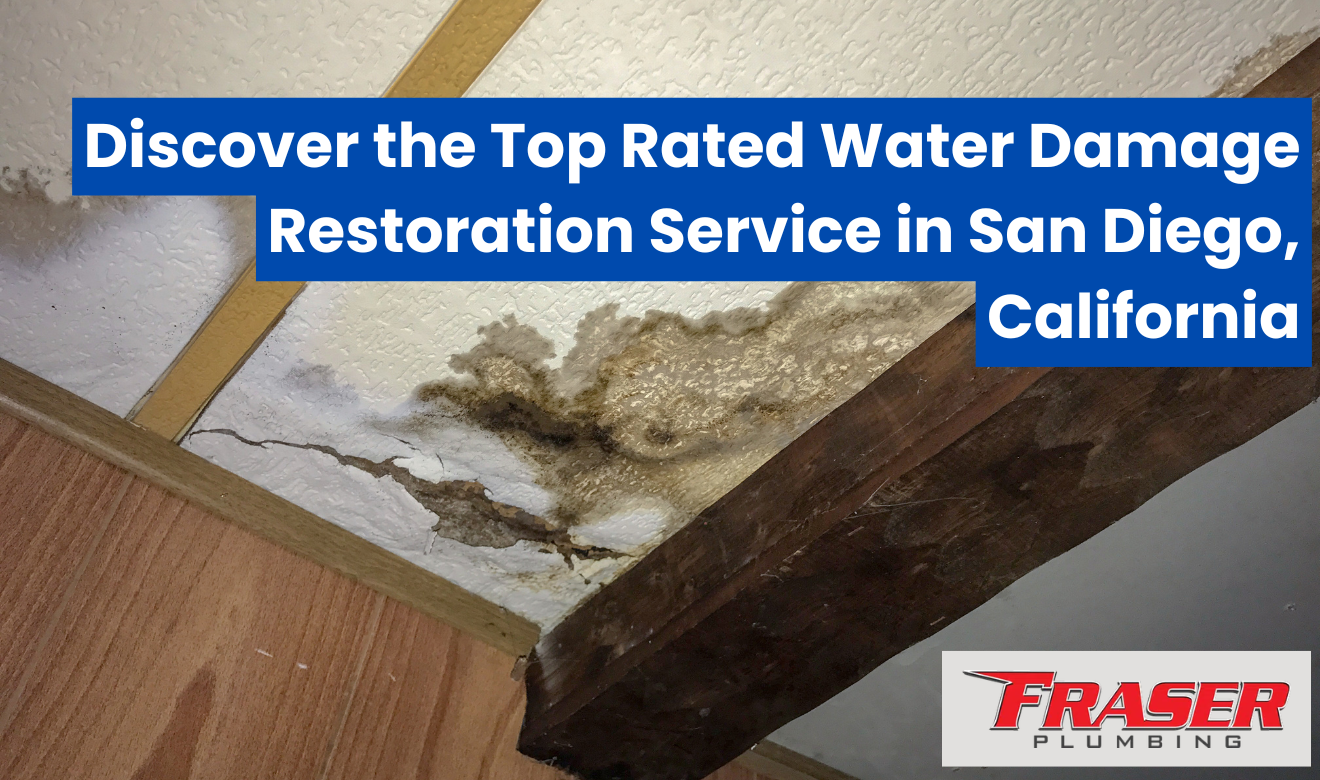
Discover the Top Rated Water Damage Restoration Service in San Diego, California
Executive Summary
Top rated water damage restoration service San Diego is defined by speed plus proof: the team stops the source, classifies contamination correctly, and dries the structure to verified moisture targets with daily instrument readings before any rebuild begins.
Core Insights
- Verification Over Guesswork: The best San Diego restorations rely on moisture mapping (thermal imaging + meter confirmation) and psychrometric logs to prove drying progress and final “ready to rebuild” conditions.
- Category Drives Scope and Safety: Clean, gray, and sewage losses require different removal, cleaning, containment, and PPE decisions, and misclassification can create health risk and insurance liability.
- San Diego Conditions Change Drying Strategy: Coastal humidity, marine layer swings, and older mixed-material construction demand correctly sized dehumidification, daily equipment adjustments, and selective openings to dry hidden cavities.
Top rated water damage restoration service San Diego is a local, rapid-response cleanup and repair solution that stops active water intrusion, removes contaminated moisture, dries structures to verified targets, and restores affected materials to pre-loss condition. In San Diego, common loss sources include slab leaks in older Mission Hills and North Park homes, HVAC condensate line overflows in Clairemont, and flash flooding runoff near canyons and low-lying streets during heavy winter storms. A top-tier crew starts with immediate shutoff support, safety checks for electrical hazards, and contamination classification for clean water, gray water from appliances, or Category 3 sewage backups. Work should include thermal imaging to map wet cavities, non-invasive moisture meter readings on drywall and baseboards, and recorded psychrometric measurements to set drying goals. Proper mitigation uses weighted extraction, controlled demolition only where needed, air movers positioned for wall and floor evaporation, and commercial dehumidification sized to cubic footage and humidity load. In coastal neighborhoods like Pacific Beach and Ocean Beach, salt air and higher ambient humidity can slow drying, so monitoring logs and equipment adjustments matter daily. Mold risk increases after 24–48 hours, so containment, HEPA filtration, and antimicrobial application are used when microbial conditions are present. Final readiness is confirmed with documented moisture content readings, odor checks, and rebuild planning that matches local material types, such as gypsum board, lath-and-plaster, engineered hardwood, and crawlspace insulation.
What “Top Rated” Water Damage Restoration Looks Like in San Diego
A genuinely top-performing restoration team in San Diego follows a documented, standards-based workflow: stop the source, classify the water, stabilize the structure, dry to measurable targets, and only then rebuild. The difference is verification—photos, moisture maps, and daily logs that prove the property is returned to a safe, dry condition.
In practice, a high-quality restoration provider aligns field decisions with widely used industry guidance such as the IICRC S500 (water damage restoration) and IICRC S520 (mold remediation). While these are not “laws,” they are the most commonly cited professional standards used by insurers, third-party adjusters, and remediation firms to define proper mitigation steps and documentation.
- Immediate source control: shutoff support at the meter/angle stops, temporary caps, or appliance isolation.
- Risk triage: electrical safety checks for wet outlets, panels, and energized circuits before equipment placement.
- Category and class identification: clean/gray/sewage determination plus how far water traveled and how much material is saturated.
- Measurable drying plan: target moisture content set against an unaffected “dry standard” area in the same building.
- Verification: final readings, photos, and a job file that supports insurance decisions and safe reconstruction.
Rapid Response: First 60–180 Minutes That Prevent Structural Loss
The first few hours determine whether water remains a cleanup or becomes a demolition-and-rebuild project. A top crew prioritizes hazard control, containment (when needed), and aggressive removal of bulk water before humidity drives secondary damage.
San Diego losses commonly start in occupied homes and multi-family buildings where time-to-dry is slowed by shared walls, dense insulation, and coastal humidity. Proper initial actions are sequenced to protect occupants, reduce claim severity, and prevent microbial amplification.
- Stop active water flow: shut off the main, isolate the fixture, or cap the line; verify the leak is no longer feeding the loss.
- Assess electrical and slip hazards: wet flooring, energized outlets, and extension cord routing for equipment.
- Identify water type: supply line (often clean), dishwasher/washer overflow (often gray), or toilet/sewer backup (Category 3).
- Extract bulk water fast: weighted extraction on carpet, squeegee and vacuum on hard surfaces, and drain removal where trapped.
- Pre-drying documentation: photos, wet-material map, and initial moisture readings to establish the baseline.
Water Category and Contamination Rules That Change the Entire Scope
Water category classification dictates what can be dried-in-place versus what must be removed for health and liability reasons. San Diego losses frequently involve gray water from appliances and, in older sewer laterals, sewage intrusion after rain events or line blockages.
Restoration decisions should be driven by contamination risk, not cosmetic appearance. Clear-looking water can still be contaminated if it contacted soil, waste lines, or stagnant building cavities.
- Clean water (Category 1): typically from a supply line; may allow more drying-in-place when acted on quickly.
- Gray water (Category 2): discharge from appliances or overflows with biological contaminants; porous materials may require removal depending on contact time and saturation.
- Sewage (Category 3): toilet overflows with feces, sewer backups, or floodwater; requires strict containment, PPE, cleaning, disinfection, and removal of impacted porous materials.
When waste lines are suspected, a sewer camera video inspection helps confirm whether the source is a blockage, root intrusion, offset joints, or a compromised lateral—critical before drying and rebuilding begins.
San Diego-Specific Drying Challenges: Coastal Humidity, Salt Air, and Building Types
Neighborhood conditions change drying behavior: coastal zones often have higher ambient humidity that slows evaporation, while inland areas dry faster but can conceal moisture in wall cavities and slab-adjacent framing. Construction era also matters—plaster, older lath systems, and post-and-pier foundations behave differently than modern drywall-on-slab builds.
Common local variables that experienced crews account for include daily marine layer swings, ventilation limitations in condos, and older plumbing layouts that place supply and drain lines in hard-to-access chases.
- Coastal (Pacific Beach, Ocean Beach): higher ambient RH can reduce dehumidifier efficiency without proper sizing and sealing.
- Canyon/low-lying runoff areas: storm water intrusion can carry contaminants and sediment requiring enhanced cleaning.
- Mission Hills/North Park older homes: slab leaks and mixed materials (plaster, hardwood, crawlspaces) demand tailored removal and drying tactics.
- Multi-family buildings: shared walls and stacked plumbing increase the chance of hidden migration to adjacent units.
How Moisture Mapping Is Verified (Not Guessed)
Accurate moisture mapping combines thermal imaging with direct meter confirmation and psychrometric readings. Thermal cameras show temperature differentials consistent with wet areas, but only moisture meters confirm saturation and drying progress.
Professional documentation typically includes a moisture map, daily monitoring notes, and comparative readings against a dry standard in the same structure. This approach supports objective “dry” verification before reconstruction and helps prevent disputes.
- Non-invasive readings: scan drywall, baseboards, and flooring transitions to identify likely wet zones.
- Invasive confirmation (when needed): pin readings or small test openings to confirm the extent inside cavities.
- Psychrometrics: temperature, relative humidity, and humidity ratio to guide dehumidification and calculate drying potential.
- Daily equipment adjustments: air mover angles, containment sealing, and dehumidifier placement based on new readings.
Equipment and Method Selection: Extraction, Airflow, and Dehumidification
Drying is a controlled engineering process: remove bulk water, increase evaporation with airflow, and capture vapor with dehumidification. Equipment quantity and placement should be based on affected square footage, material porosity, and measured humidity load—not a one-size setup.
A top-rated operation also prevents secondary damage by controlling pressure differentials and avoiding over-drying sensitive materials such as engineered wood or certain finishes.
- Weighted extraction tools: maximize removal from carpet and pad to reduce demolition when appropriate.
- Air movers: positioned to create laminar flow across wet surfaces (walls, floors, and toe-kicks), not random “blast drying.”
- Commercial dehumidifiers: sized to the job; placed to optimize air circulation and condensate management.
- Containment & air filtration: used when contamination or suspected microbial conditions are present.
Controlled Demolition: What Gets Removed and What Can Be Saved
Selective removal limits rebuild cost while still meeting health and drying requirements. The correct approach is to remove only what cannot be cleaned, dried, or structurally restored—while ensuring cavities are accessible for verified drying.
Material decisions are guided by water category, dwell time (how long materials stayed wet), and whether the assembly can be dried to target moisture content.
- Common removals: swollen baseboards, delaminated engineered flooring, saturated insulation, and drywall that wicks above safe margins.
- Often salvageable (with fast response): some solid hardwood (after proper drying), certain cabinets with limited wetting, and non-porous surfaces after cleaning.
- Category 3 rule of thumb: porous materials contacted by sewage typically require removal rather than drying-in-place.
Mold Risk Timing and When Remediation Protocols Trigger
Microbial growth risk rises as materials remain wet, especially in warm, humid, low-airflow cavities. When conditions indicate amplification (visible growth, persistent odor, elevated moisture over time), the scope must shift from “drying” to “remediation controls” such as containment and HEPA filtration.
Legally, California has specific disclosure requirements related to mold. Under California Civil Code §§ 26147–26148, landlords must provide a Mold Addendum in specified rental situations, and California also restricts who may perform mold inspection and “clearance” activities in many contexts through licensing rules (notably separation between mold assessment and remediation in regulated scenarios).
- Indicators that remediation controls may be needed: musty odor, visible spotting, prolonged saturation, or repeated wetting.
- Typical controls: critical barriers, negative pressure (as appropriate), HEPA air filtration devices, and targeted cleaning.
- Post-work verification: includes visual cleanliness, odor assessment, and moisture confirmation; independent mold clearance may be used when required by stakeholders.
Insurance-Ready Documentation: What Should Be in the Job File
Strong documentation shortens claim cycles and reduces conflicts by showing exactly what was wet, what was done, and when it reached a verified dry condition. The most defensible files are chronological, measurement-based, and photo-supported.
Ask for copies of key records because they help with adjuster review, property manager sign-off, and reconstruction scope accuracy.
- Required proof elements:
- Cause-of-loss notes (source and stop time)
- Water category and affected areas diagram
- Initial and daily moisture readings (with dry standard)
- Psychrometric logs
- Photos: before, during, and after
- Equipment list and placement notes
- Rebuild readiness package: final drying verification plus recommendations for repair sequencing.
Core Metrics Used to Judge a Restoration Job (Data Table)
Objective metrics—moisture content, humidity conditions, and contamination controls—separate professional restoration from basic cleanup. The table below summarizes the key “proof points” homeowners, property managers, and adjusters typically rely on.
| Feature / Metric | Specifications | Local Guidelines |
|---|---|---|
| Water contamination category | Category 1 (clean), Category 2 (gray), Category 3 (sewage) classification drives removal/cleaning requirements | San Diego storm runoff and sewer lateral issues increase Category 3 scenarios; scope should match health risk and building use |
| Moisture mapping method | Thermal imaging for suspect areas + moisture meter readings for confirmation + dry standard comparison | Coastal humidity can mask evaporation progress; daily readings are necessary to justify equipment changes |
| Psychrometric monitoring | Temperature and relative humidity tracked to confirm dehumidification is removing moisture, not just moving air | Marine layer conditions (near the coast) may require tighter containment and higher-capacity dehumidification |
| Demolition decision rule | Remove materials that cannot be cleaned/dried to target (especially porous materials in Category 3 losses) | Older San Diego homes with plaster, mixed subfloors, and crawlspaces often need selective openings to dry cavities correctly |
| Clearance / readiness standard | Final moisture readings at verified targets + visible cleanliness + no persistent odor + documented “after” condition | Rental properties may have additional disclosure and habitability considerations; keep reports for tenant/owner records |
How Plumbing Failures Tie Directly to Restoration Outcomes
Most recurring water losses in San Diego are plumbing-driven, so the “fix” must include both drying and source correction. If the plumbing system isn’t stabilized, restoration efforts can be undone by a repeat leak behind a wall or under a slab.
Understanding basic plumbing system behavior (supply pressure, drainage, venting, and backflow prevention) helps property owners spot risk early and communicate clearly during an emergency. For a general reference on system fundamentals, see plumbing.
- Slab leak patterns: unexplained warm spots, rising water bills, or moisture at flooring edges—common in older slabs.
- HVAC condensate issues: clogged drain lines or failed float switches leading to ceiling and wall saturation.
- Drain backups: mainline blockages that trigger Category 3 conditions and require different containment and removal decisions.
For neighborhood-focused planning and ongoing maintenance context, review trusted plumbing services in Bay Park to see common regional issues that contribute to water losses.
What to Expect at the End: Final Verification and Rebuild Sequencing
“Dry” is not a feeling—it’s a recorded condition validated by moisture measurements and a stable indoor environment. A reputable team hands off a clear rebuild plan once drying targets are met and the structure is ready for repairs.
Reconstruction sequencing should prevent re-wetting and ensure finishes are installed only after assemblies are confirmed dry.
- Final moisture verification: readings at or trending to dry standard for drywall, framing, and subfloor.
- Odor and cleanliness check: especially after gray or sewage losses; confirm no ongoing contamination.
- Repairs staged logically: insulation and drywall after cavity dryness; flooring after subfloor stability; cabinetry after wall/floor clearance.
- Preventive upgrades (optional): smart shutoff valves, pressure regulation, drip pans, or drain line maintenance to reduce repeat events.
San Diego Restoration Done Right: The Non-Negotiables That Protect Your Property
The best water damage restoration outcomes in San Diego come from measurable drying, correct contamination handling, and disciplined documentation that supports safe rebuilding. When the team verifies moisture targets, controls humidity, and resolves the plumbing source, you avoid the two costliest failures: hidden wet cavities and repeat leaks.
- Stop the source and confirm it’s fixed before drying runs at full scale.
- Classify contamination correctly so cleaning, removal, and containment match the health risk.
- Use instrument-based verification (moisture meters + psychrometrics) with daily logs.
- Adjust equipment based on data—especially in coastal humidity conditions.
- Hand off a rebuild-ready file with final readings, photos, and a clear repair sequence.
Frequently Asked Questions
Don’t “Dry It Out” and Hope—Get San Diego Water Damage Handled the Right Way, Fast
Water damage isn’t a “mop it up and run a fan” problem—it’s a hidden-structure problem. Moisture slips behind baseboards, into drywall cavities, under flooring, and along slab edges where it can quietly swell materials, trigger microbial growth in 24–48 hours, and create expensive rework when repairs go back over wet assemblies.
And in San Diego, the odds are stacked against shortcuts. Coastal humidity can slow evaporation, multi-family walls can spread moisture into neighboring units, and one wrong call on water category (clean vs. gray vs. sewage) can turn a simple cleanup into a health-risk liability. If the source isn’t correctly identified—slab leak, HVAC condensate overflow, drain backup, or storm intrusion—you can dry all week and still end up right back at square one.
A true restoration response is measured and verified: thermal imaging to find migration, moisture meters to confirm saturation, psychrometric logs to prove drying progress, and equipment that’s actually sized to the job—not guessed. Without that, you’re gambling with warped floors, crumbling drywall, lingering odor, mold claims, and insurance disputes over what was wet, what was removed, and whether the structure was ever truly returned to a safe, dry condition.
If you want this handled with urgency, documentation, and a clear plan that protects your property and your budget, start with a local team that understands San Diego’s building types, humidity swings, and the plumbing failures that cause repeat losses.
Related Posts
Shower Drain Cleaning Service in San Diego, CA: Fast, Professional Clog Removal and Odor Control
Executive Summary A shower drain cleaning service in San Diego definitively resolves slow drainage and…

Bathroom Sink Drain Cleaning in San Diego, CA: Costs, Best Methods, and When to Call a Plumber
Executive Summary Bathroom sink drain cleaning in San Diego is most reliably resolved by mechanically…