



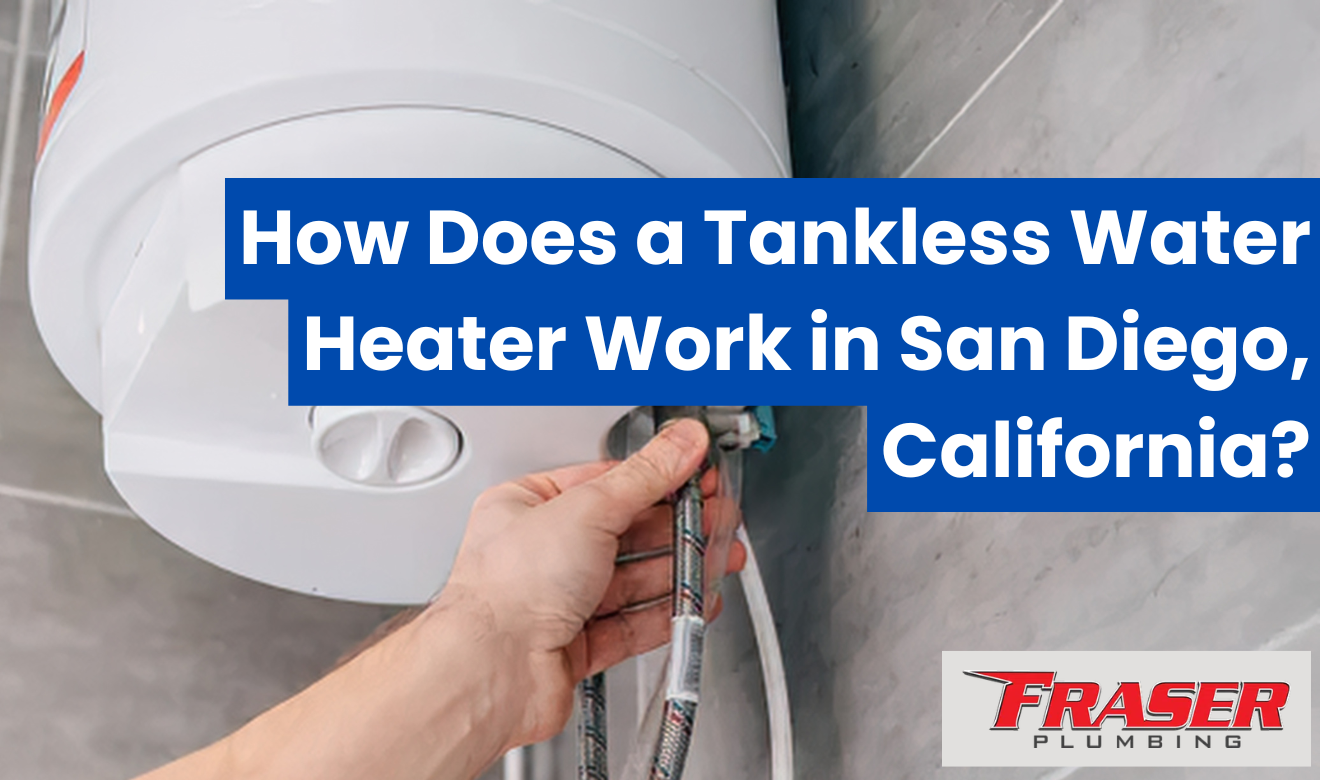
How Does a Tankless Water Heater Work in San Diego, California?
Executive Summary
A successful tankless water heater install in San Diego depends less on the brand and more on correct sizing, fuel/utility capacity, and code-compliant venting/plumbing details. When these factors are planned upfront—and paired with routine descaling—tankless systems deliver consistent hot water, space savings, and efficiency benefits.
Key Takeaways
- Sizing determines comfort: Match the unit to your peak simultaneous hot-water demand (GPM) and required temperature rise to avoid lukewarm water and temperature swings.
- Gas/electric choice affects scope: Gas often delivers higher output but may require venting and gas line upsizing, while electric models can require substantial electrical upgrades.
- Home infrastructure can drive cost: Quotes should clearly separate equipment, labor, and any upgrades for gas piping, electrical capacity, venting, condensate drainage, permits, and recirculation.
- Recirculation solves “wait time” issues: Tankless systems heat on demand but don’t inherently provide instant hot water at the tap—recirculation (dedicated or retrofit) reduces delays.
- Maintenance protects efficiency and lifespan: Annual flushing/descaling (more often with hard water), inlet filter cleaning, and including isolation/service valves during install help prevent scale-related failures.
A tankless water heater in San Diego works by heating water only when you need it, instead of storing hot water in a tank. When you turn on the shower or a sink, cold water flows through the unit and a gas burner or electric element heats it on the spot, so you get a steady stream of hot water without waiting for a tank to refill. For example, if two people take back-to-back showers in the morning, the system keeps heating as long as there’s demand, rather than running out after 10–15 minutes like some tank models. If you’re planning a tankless water heater install San Diego, it also helps to know that sizing matters—running a shower and dishwasher at the same time may require a higher flow rate unit to keep temperatures consistent.
What to Know Before a Tankless Water Heater Install San Diego
Before scheduling a tankless water heater install San Diego, focus on three things that most directly affect comfort and performance: fuel type (gas vs. electric), sizing (flow rate + temperature rise), and your home’s existing plumbing and venting layout. A tankless unit can be a major upgrade, but it’s not “one-size-fits-all.”
Quick checklist homeowners use when planning a tankless water heater install San Diego:
- How many fixtures run at once? (e.g., two showers + laundry)
- Do you have natural gas, propane, or electric only?
- Where will the unit mount? (garage, exterior wall, utility room)
- Is your water hard? Scale affects efficiency and lifespan.
- Do you want faster hot water? Recirculation may matter more than unit size.
How to Size a Tankless Unit for San Diego Homes
Sizing is the make-or-break step in any tankless water heater install San Diego. The goal is to meet your peak demand without temperature swings when someone turns on another faucet.
Step 1: Estimate peak flow (GPM)
Manufacturers rate tankless units by gallons per minute (GPM) at a given temperature rise. Typical indoor fixture flow rates vary by fixture and installed aerators/showerheads, but many efficient fixtures still land in these common ranges:
- Shower: often around 1.8–2.5 GPM
- Bathroom faucet: often 0.5–1.5 GPM
- Kitchen faucet: often 1.0–2.2 GPM
- Dishwasher: varies, but can draw hot water in cycles
- Clothes washer: varies by model and cycle
Example: If your “busy morning” is 2 showers running at the same time, your peak might be roughly 4–5 GPM. That’s the starting point for a tankless water heater install San Diego that feels consistent.
Step 2: Account for temperature rise
Tankless performance depends on how much the unit must raise incoming cold water temperature. In San Diego, incoming water is generally milder than many colder-climate cities, which can help a tankless deliver higher GPM at your target hot-water temperature. Still, coastal vs. inland neighborhoods can feel different seasonally, and performance should be based on your actual conditions and target setpoint.
Step 3: Confirm gas line / electrical capacity
A common surprise in a tankless water heater install San Diego is that the unit may require upgrades to gas piping, the electric circuit (even gas units need power), or venting. Gas tankless units often need significant BTU input, and undersized gas lines can cause ignition issues, error codes, and lukewarm water during peak demand.
Why Many People Choose Tankless in San Diego (And When They Shouldn’t)
A tankless water heater install San Diego is popular for space savings and continuous hot water—but it’s not automatically the best fit for every household.
Benefits that matter in real life
- Endless hot water (within the unit’s capacity): Great for back-to-back showers.
- Space-saving: Wall-mounted units free up garage/utility room space.
- Potential energy savings: The U.S. Department of Energy notes tankless water heaters can be 8%–34% more energy efficient than conventional storage water heaters, depending on hot-water usage patterns.
- Long service life: Many tankless units are designed to last longer than tank-style heaters when maintained.
Common dealbreakers
- High simultaneous demand: Large households may need a larger unit or multiple units.
- Hard water without maintenance: Scale buildup can reduce efficiency and cause premature failure.
- Recirculation expectations: Tankless does not automatically mean “instant hot water” at the tap.
If your priority is low operating cost with steady performance and your home has the right installation conditions, a tankless water heater install San Diego can be an excellent upgrade.
What the Installation Process Looks Like (Step-by-Step)
Most homeowners want to know what actually happens during a tankless water heater install San Diego. While every home is different, the general workflow is consistent.
Typical installation steps
- On-site evaluation: Confirm fuel source, vent route, gas line sizing, water pressure, and fixture demand.
- Permits and code considerations: Proper venting, combustion air, seismic mounting, and gas shutoff requirements matter.
- Remove old heater (if replacing): Includes proper disposal and safe gas/water disconnection.
- Install isolation valves and service ports: This is key for flushing and future maintenance.
- Venting and condensate management (if needed): High-efficiency condensing units often require condensate drainage.
- Water line tie-in + filtration options: Scale protection may be recommended depending on hardness.
- Start-up testing: Verify combustion (gas), temperature stability, flow activation, and error-free operation.
Fast tip that prevents future headaches
Ask whether the quote includes isolation/service valves and a maintenance plan. Skipping those items makes flushing harder, and flushing is one of the simplest ways to protect a tankless water heater install San Diego long-term.
Cost: What a Tankless Water Heater Install San Diego Typically Includes
Cost depends heavily on whether your home needs upgrades. Instead of focusing on one “average price,” it’s more useful to understand the cost drivers that shape a tankless water heater install San Diego.
Main cost drivers
- Unit type: non-condensing vs. condensing; indoor vs. outdoor-rated
- Fuel: gas units may require venting and gas line work; electric may require electrical upgrades
- Gas line sizing: upsizing gas piping can be a major scope item
- Venting route complexity: longer runs and roof penetrations increase labor/materials
- Water quality protection: scale prevention/filtration options
- Recirculation: dedicated return line vs. retrofit solutions
- Permits and inspection: varies by job scope and jurisdiction requirements
Cost planning table (what you’re paying for)
| scope item | why it matters | what to ask the installer |
|---|---|---|
| unit selection & sizing | prevents temperature swings and flow limits | what GPM at my required temperature rise? |
| gas line or electrical upgrades | ensures the unit can fire at full capacity safely | will you verify capacity and document the upgrade needs? |
| venting/condensate | required for safe exhaust and moisture management | is venting included, and is it manufacturer-approved material? |
| service valves & flushing access | makes maintenance realistic and protects lifespan | are isolation valves included, and how often should it be flushed? |
Bottom line: a tankless water heater install San Diego quote should clearly separate equipment vs. installation labor vs. upgrade work. That transparency is what lets you compare bids fairly.
What to Expect for Maintenance and Lifespan
Maintenance is where many homeowners either protect or shorten the life of their tankless water heater install San Diego. The primary enemy is scale buildup, especially in areas with harder water.
Practical maintenance schedule
- Flush/descale: commonly recommended about once per year (more often with harder water or heavy usage).
- Clean inlet screen/filter: helps maintain flow and reduce error codes.
- Check venting and combustion air (gas units): ensures safe, efficient operation.
- Inspect for leaks and corrosion: especially at isolation valves and fittings.
Real-world performance note
The U.S. Environmental Protection Agency’s WaterSense program reports that a family can save 2,700 gallons of water per year by switching to WaterSense-labeled showerheads. Pairing those efficient fixtures with the right tankless water heater install San Diego sizing can make it easier to meet demand without oversizing.
How to Get Faster Hot Water (Recirculation Options)
One of the most common complaints after a tankless water heater install San Diego is: “It still takes a while for hot water to reach the faucet.” That’s usually a plumbing distance issue, not a heater problem.
Ways to reduce the wait
- Dedicated recirculation line: Best performance, usually easiest during remodels.
- Crossover/retrofit recirc: Can improve convenience without running a new return line.
- Smart controls/timers: Recirculate only during peak hours to reduce energy use.
If instant comfort is the priority, build recirculation into your tankless water heater install San Diego plan from the beginning, not as an afterthought.
Why Plumbing Condition Matters More Than People Think
A tankless unit can’t perform at its best if the plumbing system feeding it has issues like sediment, corrosion, or unstable pressure. If your home has older piping, inconsistent flow, or chronic clogs, it’s smart to address those first—because they can masquerade as “tankless problems.”
For example, if you’re noticing slow drains or recurring backups, scheduling professional Drain Cleaning can help restore normal flow and reduce the risk of debris affecting fixtures and valves after a tankless water heater install San Diego.
If you’re evaluating the overall health of your plumbing system (especially in older neighborhoods), it can also help to review signs that point to bigger system-wide issues like aging lines and fittings: Signs it’s time to replace your plumbing.
And if you want a quick refresher on how the overall system fits together, this overview of plumbing fundamentals provides useful context when comparing installation options.
What Can Go Wrong (And How to Prevent It)
Most failures blamed on “bad tankless units” come down to planning, installation details, or maintenance gaps. Prevent these common issues during your tankless water heater install San Diego:
Top problems and prevention tips
- Cold-water sandwich: Ask about recirculation and proper programming to reduce temperature swings.
- Flame/ignition errors: Ensure gas line sizing is verified and venting meets manufacturer specs.
- Scale-related shutdowns: Install service valves and follow a regular flushing schedule.
- Temperature fluctuations: Confirm unit sizing for simultaneous use and consider pressure regulation if needed.
How to Choose the Right Installer (Quick Screening Questions)
If you want a tankless water heater install San Diego that performs like it should, the installer’s process matters as much as the brand. Use these questions to screen bids and avoid vague proposals.
Questions that lead to clear, comparable quotes
- Will you calculate peak GPM demand and required temperature rise for my household?
- Will you verify gas line sizing/electrical capacity before finalizing the unit choice?
- Are isolation valves and service ports included?
- What venting material will you use, and is it approved for the model?
- Will the installation be permitted and inspected where required?
- What maintenance does your warranty require (flush frequency, filter cleaning)?
A careful bid makes a tankless water heater install San Diego predictable—no surprise change orders and fewer performance issues later.
“Hot Water That Keeps Up” — The Final Takeaway
A well-planned tankless water heater install San Diego comes down to sizing for your real peak demand, confirming your home can support the fuel/venting requirements, and setting up a maintenance routine that prevents scale. Done right, you get consistent hot water, space savings, and efficiency gains that align with reputable guidance like the U.S. Department of Energy’s efficiency estimates for tankless systems.
For best results, prioritize installations performed by licensed plumbing professionals who routinely handle gas sizing, venting compliance, combustion safety, and manufacturer start-up procedures—skills typically backed by state licensing, code knowledge, and documented field experience on tankless systems across varied home layouts.
Keyword recap for search intent: If you’re comparing options or requesting bids, keep the phrase tankless water heater install San Diego in mind while you evaluate sizing, cost drivers, recirculation, and long-term maintenance—because those are the details that determine whether your tankless water heater install San Diego feels like an upgrade every day.
Frequently Asked Questions
Ready for Endless Hot Water? Let’s Size It Right the First Time.
If you’re considering a tankless upgrade, the biggest difference between “love it” and “why is the water lukewarm?” comes down to proper sizing, gas/venting verification, and a clean, code-compliant install. Fraser Plumbing of San Diego can walk you through the right unit for your real-life hot-water demand (showers, laundry, dishwasher—the whole morning rush) and handle the details that prevent future headaches, like isolation valves, flushing access, and recirculation options. Get a straightforward recommendation and a quote that actually matches what your home needs.
Related Posts
Shower Drain Cleaning Service in San Diego, CA: Fast, Professional Clog Removal and Odor Control
Executive Summary A shower drain cleaning service in San Diego definitively resolves slow drainage and…

Bathroom Sink Drain Cleaning in San Diego, CA: Costs, Best Methods, and When to Call a Plumber
Executive Summary Bathroom sink drain cleaning in San Diego is most reliably resolved by mechanically…